
Top
Search
People also search for:
Stay Inspired with Instagram




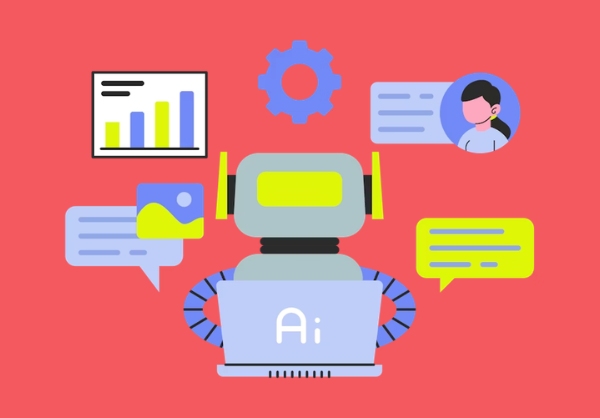
It may surprise you to learn that AI isn’t new; it has been around for decades. I recently found myself wondering why it suddenly feels like AI is everywhere. So I asked my husband, who works in IT, and his answer was simple: “AI has always been there.”
That got me thinking: if AI isn’t new, why is its impact so visible now? The answer isn’t about invention—it’s about timing. For years, AI remained mostly in research labs or in limited enterprise applications because the ecosystem wasn’t ready. Today, that has changed. Businesses generate massive amounts of data, computing power is more accessible, and modern AI models can finally deliver real-world results at scale.
As Fei-Fei Li, a renowned AI researcher at Stanford University, said, “The future of AI is about amplifying human intelligence.” This entails that what was once experimental is now practical. What was once complex is now accessible. AI is no longer a futuristic concept—it’s a tool to build smarter software, automate workflows, and create lasting competitive advantage.
What was once experimental is now practical. What was once complex is now accessible. This is why AI feels like it’s booming today.
For businesses, this is a pivotal moment. AI is no longer a futuristic concept. It’s a tool for building smarter software, automating workflows, and creating lasting competitive advantage.
The conversation around AI has shifted dramatically. In 2022, executives debated whether to adopt AI. In 2026, the question is how quickly to scale it. AI software development, the practice of designing, deploying, and iterating on systems using machine learning, generative AI, and intelligent automation, has crossed a decisive threshold. It is no longer experimental. It is operational.
Whether you are evaluating AI software development services for the first time or benchmarking your current AI software development company against the market, the question is no longer whether AI belongs in your stack — it is whether your strategy is sophisticated enough to deliver measurable ROI before competitors outpace you. As we explored in our deep dive on AI-powered software solutions, the shift is already well underway.
This guide consolidates the latest market intelligence, real-world use cases, implementation frameworks, and tools of 2026. Whether you’re a CTO, founder, or strategy leader, this is your authoritative roadmap for integrating AI into your business successfully.
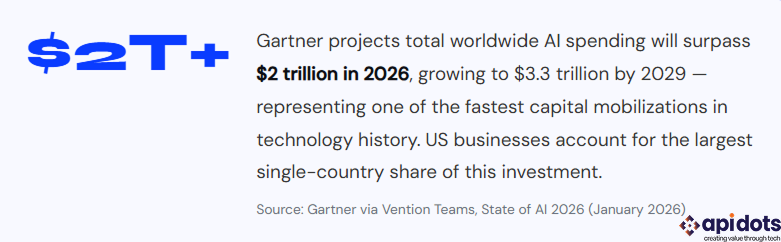
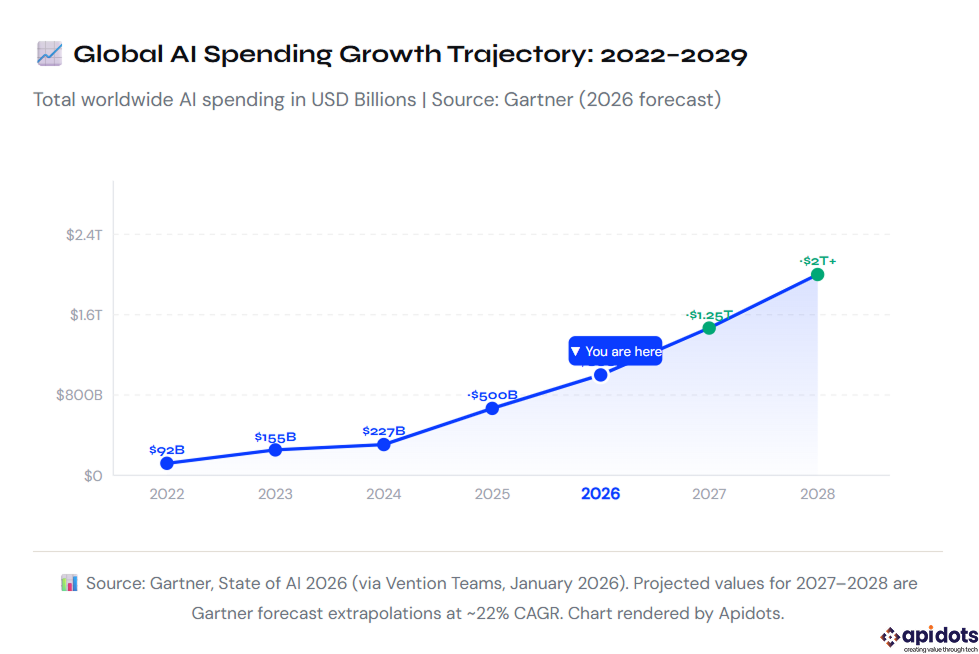
Understanding the market forces driving AI in software development helps business leaders contextualize their own investment decisions within the broader economic shift. The numbers are unambiguous. This is not a niche technology segment. It is a mainstream business transformation platform.
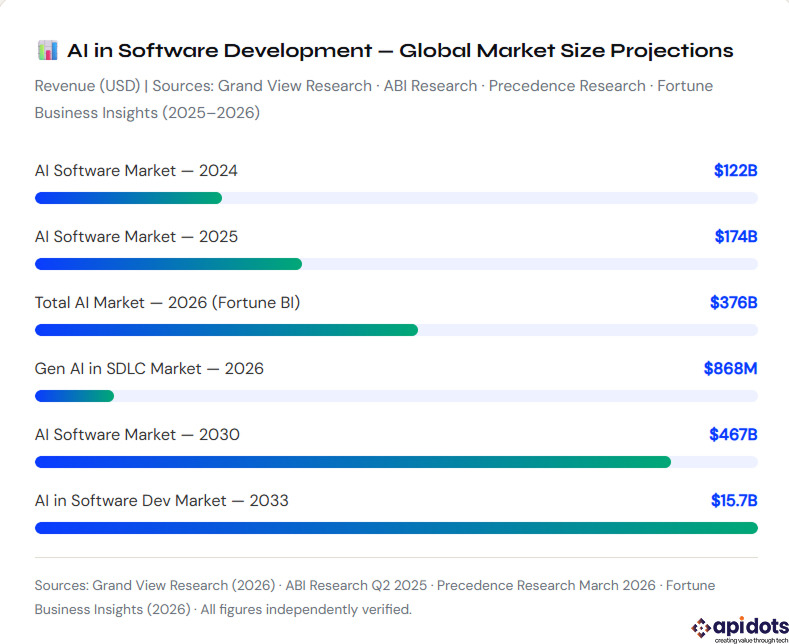
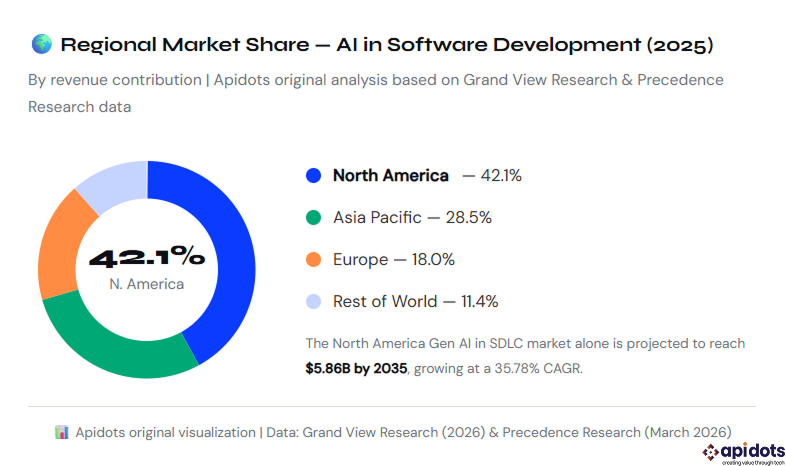
North America — and the US specifically — sits at the epicenter of this transformation. According to Grand View Research, North America held a 42.1% share of the global AI in software development market in 2024. The region’s dominance is driven by a dense ecosystem of technology companies, venture capital, research institutions, and enterprise adopters who were early to the AI inflection point.
According to Menlo Ventures’ 2025 State of Generative AI report, departmental AI spending hit $7.3 billion in 2025, up 4.1× year over year — with coding alone commanding 55% of that at $4 billion.
| Department | 2025 AI Spend Share | Key Applications | YoY Growth |
| Software Development | 55% — $4.0B | Code generation, agents, app builders | +7× YoY |
| IT Operations | 10% — $0.7B | Incident response, infrastructure management | +3× YoY |
| Marketing | 9% — $0.66B | Content generation, campaign optimization | +4× YoY |
| Customer Success | 9% | AI chatbots, support automation | +3.5× YoY |
| Design | 7% | AI-assisted UI/UX, design-to-code tools | +5× YoY |
| HR & Talent | 5% | Resume screening, onboarding AI | +2.5× YoY |
AI software development refers to the process of designing, building, testing, and maintaining software applications that incorporate artificial intelligence or use AI tools to accelerate the development process. It spans two overlapping dimensions that most successful businesses pursue simultaneously:
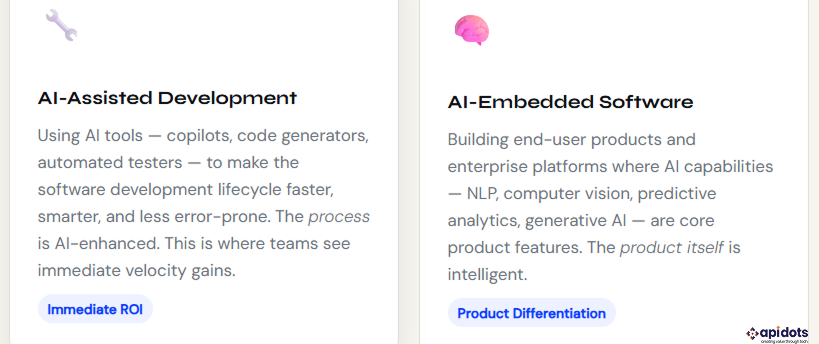
The most sophisticated organizations operate on both dimensions simultaneously — using AI tools to build AI-powered products. This compounding effect is why top-quartile organizations report 15%+ velocity gains across their entire software development lifecycle. For a deep technical view of how this plays out in practice, our guide on debugging AI-generated code covers the real-world engineering challenges teams face.
AI software development enables businesses to transform data into actionable insights. Unlike traditional software, AI systems can learn from data, adapt to changes, and scale across different departments.
For businesses, this means:
Adopting AI for business enables companies to innovate faster, deliver tailored services, and leverage data as a strategic asset, ensuring they remain competitive in an ever-evolving digital landscape.
In the following section, we’ll explore how AI enhances each phase of the Software Development Lifecycle (SDLC), making development more efficient, intelligent, and adaptable.
In traditional software development, the process typically follows these key phases:
With AI in business, each phase of this lifecycle is enhanced, allowing companies to streamline workflows, automate tasks, and reduce human error. Here’s how AI is improving each stage of the software development process:
| SDLC Phase | Traditional Approach | AI-Enhanced Approach | Example Tools |
| Requirements | Manual interviews, documentation | AI-parsed user feedback, automated spec generation | Notion AI, Jira AI (Atlassian) |
| Design | Manual wireframing, prototyping | AI design-to-code, generative UI suggestions | Figma AI, Weaver |
| Coding | Manual code writing | AI code completion, multi-file agents, auto-refactoring | GitHub Copilot Docs, Claude Code, Cursor |
| Testing & QA | Manual test writing, human review | AI-generated test suites, visual regression automation | Meticulous, Testim, Applitools |
| Code Review | Peer review (slow, inconsistent) | AI PR summaries, automated security scanning | Graphite, CodeRabbit |
| Deployment | Manual CI/CD configuration | AI-orchestrated deployment pipelines | Harness AI, Runway |
| Monitoring | Manual alert response | AI incident auto-resolution, anomaly detection | Datadog AI, Resolve |
Understanding how to use AI in business starts with knowing where it has already created proven, measurable value. Below are the ten highest-impact use cases for AI in business in 2026, based on adoption data, ROI evidence, and deployment maturity across US enterprises.
1. AI-Powered Customer Service & Chatbots
AI chatbots powered by large language models now handle 60–80% of tier-1 customer support inquiries without human intervention. They understand context, escalate intelligently, and operate 24/7 at a fraction of traditional call center cost. Leading deployments integrate with CRM and ticketing systems to provide fully personalized resolutions.
Our detailed breakdown of AI chatbots in customer service covers the guardrail and intent detection architecture that separates reliable enterprise.
2. Predictive Analytics & Business Intelligence
AI-driven predictive analytics ingests historical and real-time data to forecast demand, customer churn, equipment failure, and revenue outcomes with accuracy that rule-based models cannot approach. Finance and manufacturing teams that deploy predictive ML see planning precision improve by 25–45%, leading to direct working capital improvements.
See how predictive AI in finance and manufacturing is reshaping operational decision-making for Chicago-area enterprises.
3. AI-Assisted Software Development & Code Generation
AI code generation tools such as GitHub Copilot, Claude Code, and Cursor are fundamentally reshaping how engineering teams work. Developers who use these tools daily complete 126% more projects per week than manual-only peers. At enterprise scale, this means compressing 6-month feature roadmaps into 3 months without adding headcount.
For hands-on implementation guidance, our blog on AI coding workflows covers how to integrate these tools across your full development lifecycle.
4. AI in Financial Services: Fraud Detection & Risk Modeling
Machine learning fraud detection systems now identify suspicious transactions in real time before authorization, blocking fraud up to 53% per year. Beyond fraud, AI underwrites credit risk using thousands of non-traditional data points, dramatically expanding the identification of creditworthy customers while reducing default rates.
The full picture of AI in banking 2026, including how financial institutions are generating $1 trillion in annual value, is detailed in our comprehensive industry analysis.
5. AI-Powered Personalization in E-commerce & Retail
Recommendation engines, dynamic pricing algorithms, and AI-generated product descriptions are now table stakes for competitive e-commerce. Retailers deploying AI personalization at scale report 15–30% increases in average order value and up to 40% improvement in email campaign conversion rates. AI inventory forecasting reduces overstock and stockouts simultaneously.
Our analysis of smart AI inventory management covers how leading brands use AI to optimize inventory decisions in real time.
6. Robotic Process Automation (RPA) & Intelligent Automation
AI-enhanced RPA — also known as intelligent automation — goes beyond scripted bots to handle unstructured inputs, exceptions, and dynamic decision-making. Finance teams automate invoice processing, reconciliation, and compliance reporting. HR teams automate onboarding workflows. Operations teams automate multi-step, cross-system processes that previously required dedicated human attention.
Our comprehensive RPA vs intelligent automation guide helps business leaders choose the right automation strategy for 2026.
7. Healthcare AI — Clinical Decision Support & Administrative Automation
AI is simultaneously transforming clinical workflows and healthcare administration. Clinical decision support tools surface diagnostic insights from imaging, lab results, and clinical notes. On the administrative side, AI automates prior authorization, medical coding, and documentation — freeing clinicians for patient care. The healthcare segment is the fastest-growing vertical in AI in software development, with a 52.7% CAGR projected to 2033.
Explore AI/ML development for healthcare innovation and see real-world clinical AI implementations from Philadelphia-area medical institutions.
8. AI-Powered SaaS Product Development
The most competitive SaaS products in 2026 are not adding AI features — they are built around intelligence from the ground up. AI-native SaaS handles adaptive onboarding, predictive churn detection, natural language data queries, and automated workflow suggestions out of the box. The result is compounding product stickiness: the longer a customer uses the product, the more personalized it becomes — and the higher the cost of switching to a competitor. Companies shipping AI-native features report 2–4× higher net revenue retention versus feature-equivalent non-AI products.
Getting the architecture right from the start — multi-tenant data isolation, AI inference pipelines, token-based billing — is what separates SaaS products that scale profitably from those that accumulate technical debt faster than revenue. Teams already in production will find the product decisions that matter most covered in depth separately.
9. Agentic AI for Business Process Automation
The next wave of AI in business moves beyond single-turn chatbots to autonomous agents that plan, execute multi-step workflows, use tools, and iterate without constant human input. Agentic AI handles complex processes like market research synthesis, contract review, competitive monitoring, and multi-system data orchestration — tasks that previously required dedicated analyst time.
10. AI in Mobile App Development: Intelligent User Experiences
Mobile apps are the primary interface between businesses and customers. AI transforms them from static feature containers into adaptive, intelligent experiences — personalized content feeds, voice-first interfaces, real-time translation, biometric authentication, and predictive notifications that surface the right content at exactly the right moment.
The five key advantages of AI integration in mobile apps are explored in detail in our 2026 analysis, including architecture patterns and ROI benchmarks.
Use Case: A mid-market healthcare administration firm faced a critical bottleneck: prior authorization requests averaged 4.2 days each, frustrating clinicians and delaying patient care. Manual extraction from unstructured clinical documents was slow, error-prone, and unscalable.
Solution: API DOTS implemented an NLP-powered document intelligence system integrated directly with the client’s existing EHR.
Outcome: Within 90 days of deployment:
This demonstrates how API DOTS combines AI with existing workflows to dramatically improve efficiency, accuracy, and employee productivity.
Due to client confidentiality and NDA obligations, we cannot disclose the company name, but the results reflect real-world impact.
Selecting the right AI tools for software development is a strategic decision with direct implications for team velocity, product quality, and competitive positioning. The tool landscape in 2026 is mature, segmented by use case, and moving fast. Here is an authoritative breakdown organized by function — with no fluff, just what works at scale.
The code generation category is the largest single segment of departmental AI spending at $2.3 billion in 2025, and for good reason — the productivity evidence is unambiguous. Teams using these tools complete more projects, write fewer bugs, and onboard new developers faster. The key to extracting maximum value is pairing the right tool with the right workflow, rather than layering multiple tools without integration discipline.
| Tool | Best For | Key Capability | Pricing Tier |
| GitHub Copilot | All team sizes | In-IDE code completion, PR summaries, security scanning | $19–$39/user/month |
| Claude Code | Complex codebases | Agentic multi-file editing, strong SWE-bench performance | API-based |
| Cursor | Full-stack teams | AI-native IDE, deep codebase context, multi-file refactoring | ~$20/user/month |
| v0 / Lovable | Prototyping & MVPs | Prompt-to-deployed app, full-stack generation | Freemium — (no single official canonical page) |
| Continue.dev | Privacy-conscious teams | Open source, local model support, any IDE | Free / Self-hosted |
The testing automation segment is the fastest-growing category within AI in software development, expected to see the highest CAGR between 2026 and 2035, according to Precedence Research.
| Tool | Specialization | Key Benefit |
| Meticulous | Visual regression testing | Fully autonomous and eliminates manual front-end test writing entirely |
| Testim | ML-powered test automation | Self-healing tests when UI changes, which reduces maintenance overhead |
| Applitools | Cross-browser visual testing | AI-powered pixel-level comparison across browsers, devices, and viewports |
| Snyk AI | Security vulnerability scanning | Real-time security fix suggestions integrated directly into CI CD pipelines |
| Mabl | End-to-end test automation | AI-driven test creation and maintenance from recorded user journeys |
Building AI features is only half the work. Running them reliably at scale in production — with monitoring, retraining pipelines, cost control, and performance guarantees — requires purpose-built MLOps infrastructure. These platforms are the operational backbone of mature AI software development solutions.
1. Cloud MLOps: AWS SageMaker provides an end-to-end ML platform for training, deployment, and monitoring, widely used by enterprises on AWS. Azure Machine Learning offers strong enterprise governance with deep Microsoft 365 integration and automated model retraining.
2. AI Observability: Datadog enables intelligent anomaly detection, natural-language log queries, and predictive alerting.
3. AI Native CI/CD: Harness delivers automated deployment pipelines with anomaly detection and AI-guided rollback capabilities.
4. Vector Databases: Pinecone and Weaviate provide essential infrastructure for semantic search, retrieval-augmented generation pipelines, and LLM memory.
5. Open Source MLOps: MLflow supports experiment tracking, model registry, and flexible cloud-agnostic deployment.
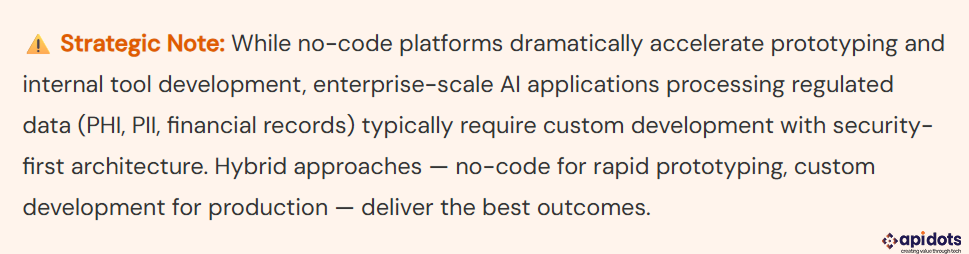
No-code platforms represent the most democratizing force in AI for business in 2026. They enable business teams to build AI-powered applications without traditional programming, compressing development timelines from months to days. Gartner predicts that 70% of new applications will use low-code or no-code platforms by 2025 — and that trajectory is accelerating.
The most common failure mode in enterprise AI adoption is not lack of technology — it is lack of strategy. Organizations that attempt to implement AI without a structured framework end up with siloed proofs of concept that never reach production. The following five-phase framework, informed by real-world implementation patterns across US businesses, provides a reliable path from exploration to scaled value creation.
1. Strategic Audit & Opportunity Mapping: Map your existing workflows, data assets, and operational pain points. Identify the 3–5 processes where AI delivers the highest ROI-to-effort ratio. Do not start with the most technically exciting use case. Start with the highest business impact. Prioritize areas with high volume, clear success metrics, and available historical data.
2. Data Readiness Assessment: AI systems are only as good as the data they learn from. Audit your data for volume, quality, accessibility, labeling, and regulatory compliance. This phase consistently reveals critical gaps, data silos, inconsistent formatting, and missing labels that must be resolved before model development begins. Budget 2–3× more time than initially estimated for data preparation.
3. Build & Pilot (Controlled Environment): Develop a minimum viable AI solution and deploy it in a controlled production environment with a subset of users or processes. Set clear KPIs before launch: latency targets, accuracy thresholds, and user adoption rates. This phase validates the business case with real data before broader organizational commitment.
4. Evaluate, Iterate & Harden: Analyze pilot results rigorously. Where did the model underperform? What edge cases emerged that were not in the training data? Iterate on model architecture, improve data pipelines, and address security or compliance gaps identified during the pilot. This is where durable AI programs earn their resilience.
5. Scale, Monitor & Govern: Roll out across the organization with robust monitoring (model drift detection, performance dashboards), a clear governance structure (ownership of AI decisions, bias auditing, escalation protocols), and a continuous improvement cadence. AI systems require ongoing maintenance; they are not fire-and-forget deployments. The organizations that sustain AI ROI treat this phase as permanent.
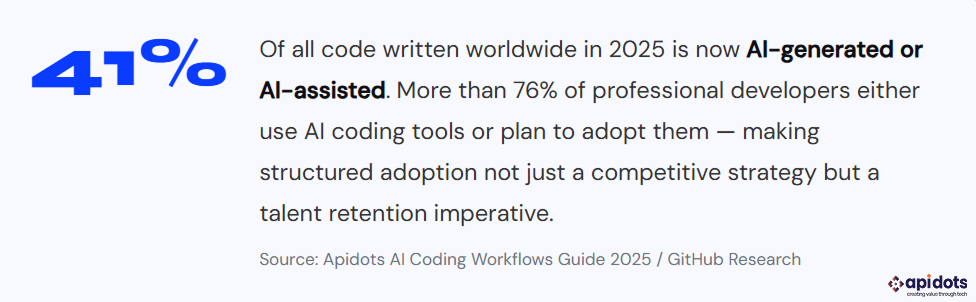
One of the most consequential decisions for business leaders pursuing AI software development is how to access the capability. Three models exist, and the right choice depends on your use case complexity, timeline requirements, budget, and internal technical maturity.
| Model | Description | Ideal For | Key Risks | Time to Value |
| Build In-House | Hire AI engineers, data scientists, and MLOps specialists to build proprietary models and infrastructure | Large tech companies with unique data moats and AI as a core product differentiator | High talent cost ($200K+ per engineer), 18+ month ramp time, ongoing model maintenance burden | 12–24+ months |
| Buy SaaS AI Tools | Subscribe to off-the-shelf AI software development tools and platforms | SMBs with limited budgets and standardized, non-proprietary use cases | Limited customization, vendor lock-in, data privacy exposure | Days to weeks |
| Partner with AI Development Company | Engage a specialized AI software development company to design, build, and integrate custom AI solutions | Mid-market to enterprise businesses needing custom AI with expert guidance and faster time to production | Vendor selection risk, IP ownership clarity required upfront | 4–12 weeks |
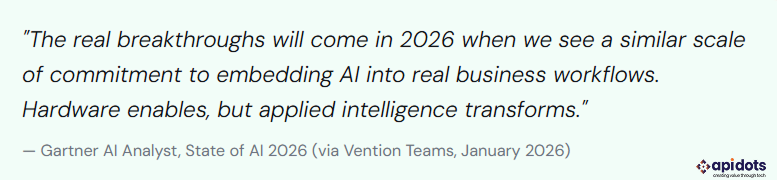
The realistic timeline from “we need to hire AI engineers” to “we have something running in production” is 12–18 months in most US enterprises. A specialist AI development partner compresses that to 4–12 weeks. Here is why the math consistently favors partnering for most organizations:
1. Immediate access to specialized talent. Senior AI engineers command $170K–$220K annually in US markets, and the average recruitment cycle for specialized AI roles runs 6–12 months. An AI development partner gives you a team that already knows how to build production-grade ML systems — on day one.
2. Proven methodologies that reduce delivery risk. Internal teams learning AI on the job make predictable mistakes — underestimating data preparation, skipping model evaluation frameworks, and deploying without monitoring infrastructure. Experienced AI partners have made those mistakes on previous projects and built processes to avoid them.
3. Flexible cost structure that matches project phases. In-house AI teams carry fixed costs regardless of project stage. Partnering allows you to pay for the capacity you actually need — scaling up for development phases and back down for maintenance periods.
4. Access to the latest AI capabilities without internal R&D investment. Generative AI, agentic systems, RAG architectures, multimodal models — these are being deployed by competitors now. A specialist AI partner’s entire business depends on staying at the frontier of what is deployable in production environments.
Every AI investment must ultimately deliver measurable business outcomes. Tracking ROI requires both quantitative metrics and contextual understanding of how AI impacts operations, revenue, and customer experience. The framework below outlines key performance indicators (KPIs) that U.S. business leaders can track across the AI investment lifecycle, along with typical improvements, measurement windows, and practical considerations for calculation.
Measuring ROI from AI software development goes beyond anecdotal claims—it quantifies how AI impacts productivity, efficiency, revenue, risk, customer experience, and time-to-market. By tracking metrics like code velocity, process automation, conversion rates, fraud reduction, customer satisfaction, and feature delivery speed, businesses can clearly see the value of AI investments and prioritize projects that deliver the highest measurable impact.
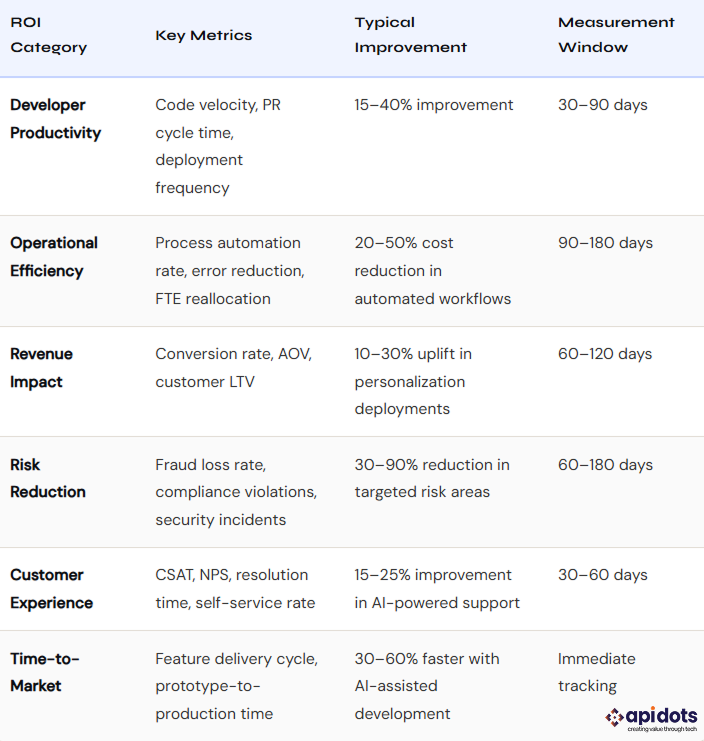
Key takeaway: Focus on the KPIs that align with your business goals, such as time-to-market for startups or risk reduction for enterprises. Supplement the metrics with real-world examples or pilot projects to validate AI impact, and track progress iteratively, recognizing that short-term gains may differ from long-term results.
By applying this structured approach, business leaders can move beyond anecdotal claims about AI and rigorously quantify the return on their software development investments.
Challenge:
Most organizations have data scattered across legacy systems, inconsistently formatted, and poorly governed. This makes it difficult to train reliable AI models or generate meaningful insights.
How to Overcome:
Start with a data strategy before an AI strategy. Build a modern data stack that includes a data lake, transformation layer, and unified data catalog. Standardize and clean your data pipelines. In regulated industries like healthcare and finance, use synthetic data to supplement limited or sensitive datasets.
Challenge:
Demand for AI and machine learning talent far exceeds supply. Skilled AI engineers command high salaries, making it difficult for most companies to build strong in-house teams.
How to Overcome:
Focus on upskilling your existing engineering team with AI tools and workflows. Combine this with partnerships with specialized AI software development companies for advanced capabilities like model training, MLOps, and system design. This hybrid approach balances cost, speed, and expertise.
Challenge:
AI systems introduce new risks, including prompt injection, model inversion, and data poisoning. They also create compliance challenges when handling sensitive data through third-party APIs.
How to Overcome:
Adopt a security-first approach. Implement data anonymization before training, isolate sensitive workloads, and enforce strict access controls. Regularly test systems through red-teaming and ensure compliance with standards like GDPR, HIPAA, or SOC 2 based on your industry.
Challenge:
Even with strong ROI potential, internal resistance and cultural inertia can slow AI adoption.
How to Overcome:
Position AI as a tool for augmentation, not replacement. Communicate clearly how roles will evolve and where efficiency gains will occur. Invest in training and transparency to build trust and alignment across teams.
Challenge:
AI models lose accuracy over time as real-world data changes, leading to declining performance if not actively maintained.
How to Overcome:
Implement continuous monitoring with drift detection systems and performance alerts. Establish automated retraining pipelines that regularly update models with fresh data to ensure long-term accuracy and reliability.
Selecting the right AI software development company is one of the highest-leverage technology decisions a US business leader will make. The following evaluation rubric identifies what separates world-class AI partners from vendors who cannot deliver at scale.
| Evaluation Criterion | What Excellence Looks Like | Warning Signs |
| Technical Depth | Demonstrable expertise in your specific AI stack — ML, NLP, computer vision, LLMs. Published case studies with measurable, attributed outcomes. | Generic AI claims with no domain-specific portfolio evidence |
| Industry Experience | Prior work in your vertical with regulatory understanding (HIPAA, SOC 2, PCI-DSS, FedRAMP) | No named industry references or compliance experience |
| Data Security Practices | Clear data processing agreements, privacy-by-design architecture, security certifications, and audit trail capabilities | Vague or absent data governance documentation |
| Transparency & Honesty | Realistic timelines, honest about limitations, clear IP ownership terms stated upfront | Overpromising, vague SLAs, murky intellectual property arrangements |
| Post-Launch Support | Defined model monitoring, retraining, and optimization roadmap with documented SLAs | “We build and hand off” mentality with no ongoing support commitment |
| Integration Capability | Proven experience integrating AI solutions with existing enterprise tech stacks (ERP, CRM, legacy databases) | Inability to reference complex integration work at scale |
Score each vendor 1–5 on every criterion, apply the weighting multiplier, then total the scores. The vendor with the highest weighted score is the right fit for your context — not necessarily the one with the most impressive website.
| Criterion | Startup / SMB Weight | Mid-Market Weight | Enterprise Weight |
| Technical Depth | ×3 (dealbreaker) | ×3 | ×3 |
| Industry Experience | ×1 (nice-to-have) | ×2 | ×3 (dealbreaker) |
| Data Security | ×2 | ×3 (dealbreaker) | ×3 (dealbreaker) |
| Transparency | ×2 | ×2 | ×2 |
| Post-Launch Support | ×1 | ×2 | ×3 (dealbreaker) |
| Integration Capability | ×1 | ×2 | ×3 |
For US businesses in regulated industries, compliance is the primary purchase filter. An AI development company that cannot demonstrate fluency in your regulatory framework should not make your shortlist, regardless of technical capability.
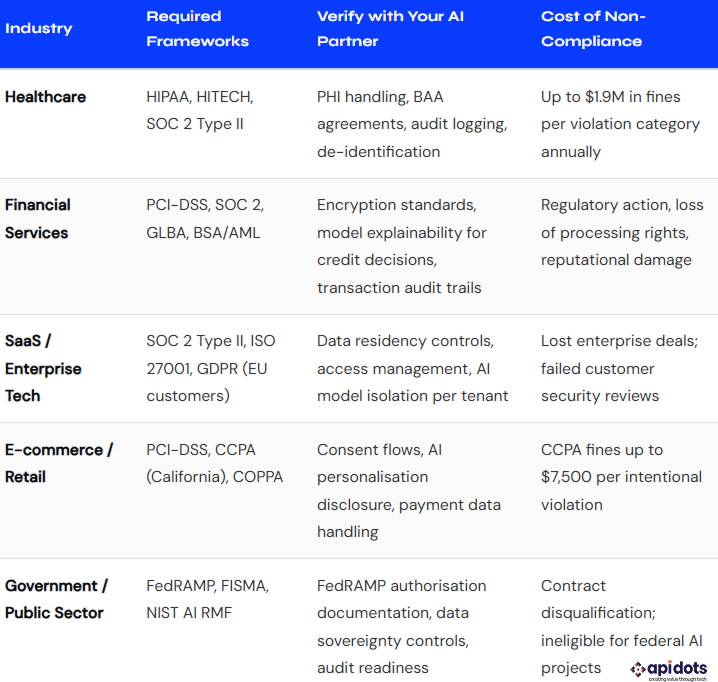
Apidots is a full-stack AI software development company with a delivery track record across finance, healthcare, manufacturing, and SaaS. Our engineering teams have designed and shipped custom AI solutions — from predictive ML models and LLM-powered applications to intelligent automation platforms and AI-native SaaS products — for businesses ranging from funded startups to mid-market enterprises.
What sets our AI software development services apart: we build with your data architecture and compliance requirements from day one, we do not hand off after launch, and every engagement is scoped to deliver a measurable business outcome — not just a working model.
Industries served: Finance, Healthcare, Real Estate, SaaS, E-commerce, Retail, IT Consulting.
Cost is the first question every founder, CTO, and enterprise owner asks. Yet most guides bury it or skip it entirely. Here is a direct, honest breakdown of what AI software development services actually cost in 2026, organized by project type, team model, and the hidden variables that move the number most.
| Project Type | Typical Cost Range | Timeline | Best For |
| No-Code AI Automation | $3,000 – $20,000 | 1–4 weeks | SMBs, internal tools, document automation |
| Custom AI Feature | $25,000 – $120,000 | 6–12 weeks | Adding AI to an existing product or workflow |
| AI-Native SaaS Product | $80,000 – $400,000 | 3–7 months | Founders building AI-first B2B or B2C products |
| Enterprise AI Platform | $200,000 – $1M+ | 6–18 months | Large organizations, multi-system AI integration |
| Team Model | Typical Annual Cost | Speed to Production | Best Fit |
| In-House AI Team | $600K – $1.2M+ (3 engineers) | 12–24 months to full capacity | Large organizations with AI as a core competitive advantage |
| SaaS AI Tools | $5K – $80K/year (subscriptions) | Days to weeks | SMBs with standardized, repeatable use cases |
| AI Development Partner | $25K – $500K per project | 4–12 weeks to first production | Mid-market and enterprise with custom AI requirements |
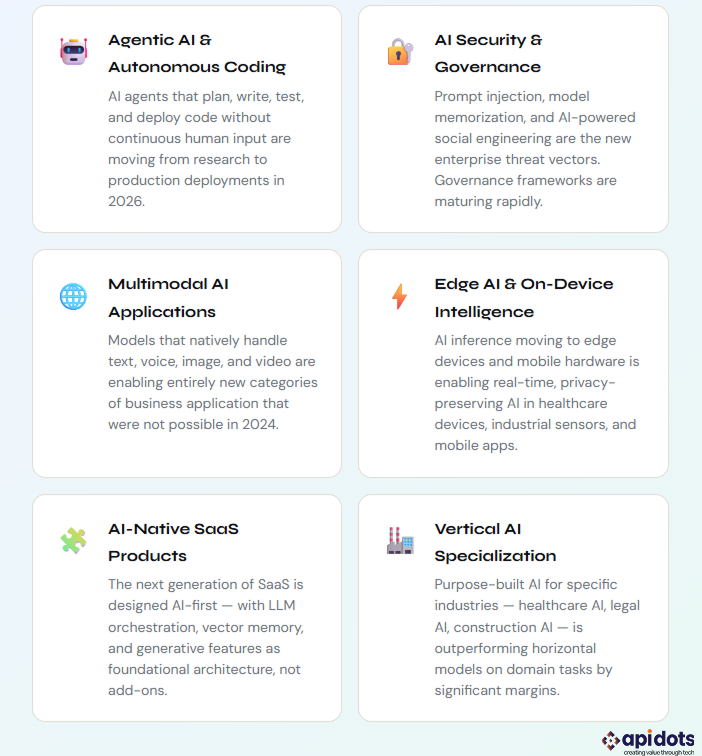
The AI software development landscape in 2026 is just the beginning. Over the next 2–3 years, AI will move from prompt-based tools to autonomous, agentic systems (agentic AI vs AI agents), while software is increasingly designed AI-first, with RAG systems, vector databases, and LLM orchestration replacing traditional logic. Multimodal AI will enable unified handling of text, voice, images, and video, opening new possibilities for enterprise applications (multimodal AI and the future of work).
At the same time, no-code AI platforms will make sophisticated AI accessible to non-technical users, shifting the focus from adoption to governance and responsible use (AI governance and law). Businesses that plan for these trends now can build scalable, future-ready AI systems that deliver competitive advantage.
The AI software development landscape of 2026 is only the beginning of a decade-long transformation. Four major trajectories will define the next 24–36 months for US businesses investing in AI:
What is AI software development, and how does it differ from traditional development?
AI software development involves both building AI-powered features (like NLP, computer vision, and predictive analytics) and using AI tools to accelerate development. Unlike traditional deterministic software, AI systems use data-driven models that improve over time, enabling faster releases, better automation, and smarter decision-making.
How much does custom AI software development cost for a US business?
Custom AI development typically ranges from $5,000 for simple automations to $1M+ for enterprise platforms. Small features cost $30,000–$150,000. ROI matters more than cost—well-defined AI projects often deliver 200–500% returns within 12 months by automating high-volume business processes.
What are the best AI tools for software development in 2026?
Top AI development tools in 2026 include GitHub Copilot, Cursor, Datadog, AWS SageMaker, and frameworks like LangChain. The best stack depends on your tech environment, team size, and use case.
How do I know if my business is ready for AI software development?
Your business is ready for AI if you have structured data, a clearly defined problem, a committed budget, and technical oversight. Without these, AI projects often fail. A readiness audit helps identify gaps and ensures you invest in high-impact, feasible AI initiatives.
How long does it take to implement AI in a business?
AI implementation takes 1–4 weeks for simple automations, 6–12 weeks for custom features, and 3–9 months for full platforms. Data preparation is the biggest factor, typically consuming 40–60% of total project time in enterprise AI implementations.
Is no-code AI development secure for enterprise use?
No-code AI platforms like Microsoft Power Platform and Retool offer enterprise security features such as SSO and audit logs. However, sensitive data (PII, PHI, financial) often requires custom-built solutions to meet compliance standards like GDPR or HIPAA.
You don’t need a complete AI strategy or a technical background to get started.
What matters is having a clear problem worth solving.
At API DOTS, we offer a free 30-minute consultation focused on your business—not a sales pitch.
We’ll review your idea, assess where AI can realistically add value, and outline what it would take to build it.
If it makes sense to move forward, we’ll explain the next steps.
If it doesn’t, we’ll tell you that upfront.
Simple, honest guidance so you can make the right decision.
The AI software development landscape evolves weekly. Here are the key trends Apidots’ engineering team is tracking most closely in 2026 and the resources to help you stay ahead of each one.
Hi! I’m Aminah Rafaqat, a technical writer, content designer, and editor with an academic background in English Language and Literature. Thanks for taking a moment to get to know me. My work focuses on making complex information clear and accessible for B2B audiences. I’ve written extensively across several industries, including AI, SaaS, e-commerce, digital marketing, fintech, and health & fitness , with AI as the area I explore most deeply. With a foundation in linguistic precision and analytical reading, I bring a blend of technical understanding and strong language skills to every project. Over the years, I’ve collaborated with organizations across different regions, including teams here in the UAE, to create documentation that’s structured, accurate, and genuinely useful. I specialize in technical writing, content design, editing, and producing clear communication across digital and print platforms. At the core of my approach is a simple belief: when information is easy to understand, everything else becomes easier.