
Top
Search
People also search for:
Stay Inspired with Instagram




Legacy systems don’t fail overnight—they quietly drain resources, slow innovation, and increase security risk. What once powered your business efficiently now limits scalability, delays product releases, and inflates maintenance costs. For leadership teams, legacy modernization isn’t just a technical upgrade. It’s a financial and strategic decision. Organizations modernizing legacy systems report reduced operational costs, improved agility, and a stronger cybersecurity posture. To understand the full spectrum of approaches available, explore how re-platforming vs. re-architecting modernization strategies differ and which one aligns best with your business goals. According to industry research from Mordor Intelligence, the global legacy modernization market is projected to grow significantly as enterprises prioritize digital transformation and cloud adoption.
In this blog, we explore the business case for legacy application modernization—covering cost savings, scalability, risk reduction, and long-term ROI.
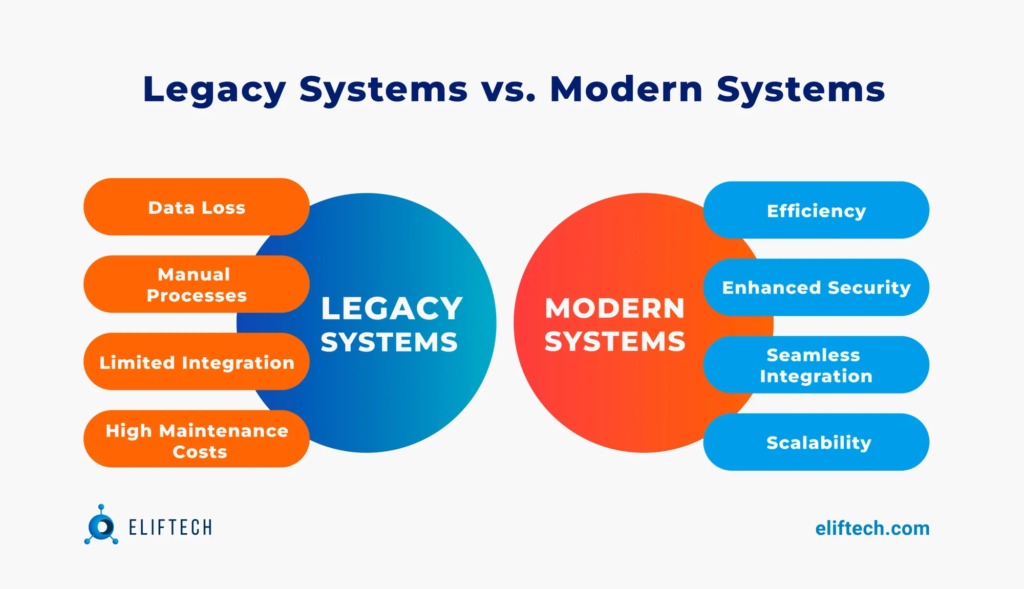
source of image: https://www.eliftech.com/insights-old/content/images/size/w1000/2023/09/legacy-vs-modern-01–1-.webp
Legacy modernization means changing how an application is built, operated, and delivered so it fits current technology and business needs. That can mean:
If we make changes in this manner, the outcome is:
Legacy applications might appear dependable, but in reality, they have numerous problems that can eventually stain the organization’s competitive position and profitability. Here are some of the most common challenges legacy applications are facing today:
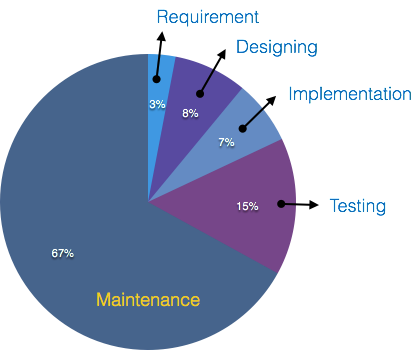
Source of image: https://www.tutorialspoint.com/software_engineering/images/maintenance_cost_chart.png
The common link between industries, such as financial services and health care, is the legacy applications that make them susceptible to the challenges of legacy applications. Modernization requirements do extend outside of financial services and health care, so obtaining insight from organizations that migrated from functional legacy applications may be insightful. Knowing when to modernize legacy applications is one of the most important decisions a leadership team can make — acting too late compounds debt, while acting at the right moment maximizes ROI. Let’s look at how some of the biggest names in the business improved productivity, effectiveness, and relevance by modernizing their IT infrastructure.
Business leaders are most concerned with the key benefits of legacy modernization.
Modernizing legacy systems doesn’t have to disrupt operations. Our experts help organizations transition to scalable, cloud-native architectures with measurable ROI.
The decision of whether to modernize outdated applications should be based on a proper evaluation of the shortcomings of your current systems and the overall advantages of modernization to your business. For example, in the financial and healthcare industries, where data integrity, security, and compliance of applications are paramount, modernization is no longer optional; it’s imperative.
When you choose to modernize your legacy systems, you aren’t simply extracting yourself from old technology; you’re building a future-proofed organization. The return on investment will be considerable, not just in financial terms, but also in intangible benefits such as improved customer experience, employee satisfaction, and, perhaps more importantly, a greater competitive advantage.
Nike: A well-known company recently modernized its IT systems to better integrate the digital and physical retail experience. Nike reapportioned some of its investment in technology towards the benefits of cloud computing, big data analytics, and AI to improve efficiencies in its supply chain, enhance customer personalization, and develop new direct-to-consumer sales channels. Nike believes IT modernization is a critical factor for it to be successful in the highly competitive sportswear industry.
Modernizing outdated applications is a strategic decision that brings substantial benefits and solid ROI to your organization. If you feel the time has come to modernize your organization, there is no better time to start than now. Modernization is not a leap of faith. It’s a measurable, executable program. Understanding the legacy application modernization benefits in detail will give your leadership team the confidence and clarity needed to move forward decisively.
Don’t let outdated systems hold your business back. Start your legacy application modernization journey with APIDOTS today and unlock scalability, lower costs, and long-term growth.
1. What is legacy application modernization?
It is the process of updating outdated systems to modern architectures such as cloud-native, microservices, or SaaS-based platforms.
2. How do I know if my system needs modernization?
Signs include high maintenance costs, security vulnerabilities, slow feature releases, and scalability limitations.
3. What are the main modernization approaches?
Rehosting, replatforming, refactoring, re-architecting, and replacing legacy systems with SaaS solutions.
4. Is modernization expensive?
While there is upfront investment, long-term savings from reduced maintenance, improved productivity, and lower risk typically generate strong ROI.
5. How long does legacy modernization take?
Timelines vary depending on system complexity, but phased modernization strategies minimize disruption.
We design and develop secure, high-performance web and mobile applications.Ensuring scalability, reliability, and long-term product success.
Hire App Developers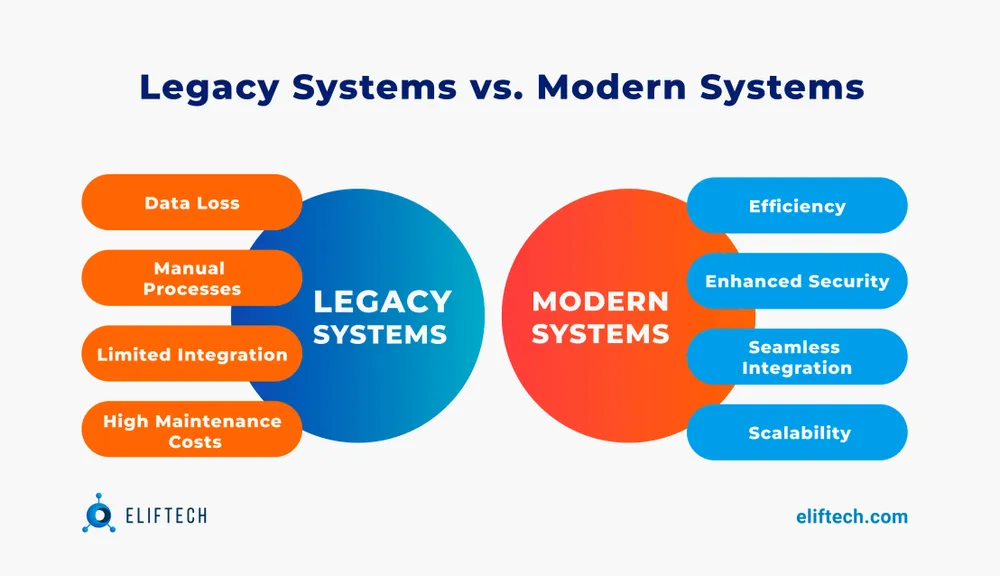
Hi! I’m Aminah Rafaqat, a technical writer, content designer, and editor with an academic background in English Language and Literature. Thanks for taking a moment to get to know me. My work focuses on making complex information clear and accessible for B2B audiences. I’ve written extensively across several industries, including AI, SaaS, e-commerce, digital marketing, fintech, and health & fitness , with AI as the area I explore most deeply. With a foundation in linguistic precision and analytical reading, I bring a blend of technical understanding and strong language skills to every project. Over the years, I’ve collaborated with organizations across different regions, including teams here in the UAE, to create documentation that’s structured, accurate, and genuinely useful. I specialize in technical writing, content design, editing, and producing clear communication across digital and print platforms. At the core of my approach is a simple belief: when information is easy to understand, everything else becomes easier.