
Top
Search
People also search for:

Stay Inspired with Instagram



In today’s fast-paced digital marketplace, design is no longer just about aesthetics — it’s about creating meaningful experiences. Businesses across Texas, from innovative startups to established e-commerce brands, are realizing that UI/UX designing in Texas is the secret ingredient for lasting customer loyalty and higher conversions. When users feel delighted, understood, and empowered by a digital product, they don’t just use it — they connect with it.
In this blog, we’ll explore how user interface (UI) and user experience (UX) design are shaping the future of Texas tech and e-commerce, highlight the key principles behind successful design, and uncover how local businesses can leverage these practices to stay ahead of the competition.
Texas is home to a thriving tech and e-commerce ecosystem — from Austin’s booming startups to Dallas’s digital marketplaces and Houston’s innovative retailers. Yet, in such a competitive landscape, a visually appealing website or app is no longer enough. Customers demand seamless interactions, quick loading times, and intuitive navigation.
That’s where UI/UX designing in Texas plays a critical role. It bridges the gap between technology and human behavior — ensuring every click, scroll, and interaction feels natural and enjoyable.
By focusing on UI/UX best practices, Texas businesses can stand out — not only by what they sell but by how they make customers feel while engaging with their brand.
A powerful UI/UX strategy ensures your digital platform is not just usable, but delightful. The process starts with understanding your users — their needs, motivations, and pain points.
Key Elements of Exceptional UI/UX Design:
For local businesses in Texas, combining these principles with cultural and regional nuances — such as tone, visuals, and color palettes — can further strengthen customer connection.
The e-commerce industry thrives on convenience, trust, and emotional connection. A beautifully designed online store does more than look good — it builds credibility and keeps shoppers coming back.
Here’s how UI/UX designing in Texas can elevate an online business:
In essence, your e-commerce success depends on how well your digital storefront represents your brand values while meeting the expectations of a tech-savvy Texas audience.
From fintech startups in Austin to real estate and construction firms in Dallas, businesses across Texas are realizing that good design drives results. UI/UX isn’t just about how things look — it’s about how they work for the people using them.
For Local Professionals and Entrepreneurs:
Texas consumers value experiences that feel authentic and easy to use — which means a website or app that frustrates users can quickly lose relevance.
Creating a delightful digital experience requires more than creative visuals — it’s about understanding how users think, behave, and make decisions. Whether you’re designing for a Texas-based startup, a retail platform, or a large-scale tech product, these UI/UX best practices can help you craft intuitive and impactful digital experiences.
Every element — from your buttons and icons to typography and whitespace — should have meaning. Purpose-driven design eliminates clutter and focuses the user’s attention on what truly matters.
For instance, Texas e-commerce stores often see higher conversions when CTAs are clearly visible and supported by meaningful visuals rather than decorative ones. Simplicity ensures clarity, and clarity builds trust.
Users scan before they read — meaning the way you organize content visually influences their behavior. Use contrast, typography, and color strategically to guide users through your site or app.
For example, highlight primary actions (like “Buy Now” or “Sign Up”) with distinct colors and spacing. A well-balanced visual hierarchy keeps users engaged and reduces cognitive effort, helping them reach their goals faster.
In a state where competition moves fast, your digital platform should load even faster. A delay of just one second can reduce conversions by up to 20%.
Optimize images, compress code, and remove unnecessary plugins. Fast load times enhance not only user satisfaction but also search engine rankings — a win-win for Texas tech and e-commerce businesses aiming for visibility and performance.
Texans love convenience — and mobile shopping is the new norm. Designing with a mobile-first mindset ensures that your site looks and performs beautifully on all devices.
From thumb-friendly buttons to minimal text input fields, prioritize ease of use. A responsive, mobile-optimized experience gives your users the flexibility to browse, compare, and buy from anywhere.
Great design is never finished; it evolves. Conduct usability tests with real users to identify friction points. A/B testing helps discover what layout, copy, or visuals convert best.
By gathering feedback and analyzing behavior, Texas businesses can refine their UI/UX design over time — keeping the experience fresh, modern, and customer-focused.
Emotion drives decisions. Add small but meaningful touches that reflect Texas culture — warm tones, relatable imagery, or conversational copy.
When users feel that your brand “gets them,” they’re more likely to engage, recommend, and return. This approach transforms a transactional experience into a relationship-driven one.
An inclusive design ensures everyone — regardless of ability — can navigate your digital experience comfortably. Use proper contrast, alt text for images, and intuitive keyboard navigation.
Not only does accessibility expand your audience, but it also demonstrates your brand’s integrity and respect for every user.
Maintain uniformity across every touchpoint — buttons, icons, colors, and tone. A consistent experience builds confidence and makes navigation intuitive.
For tech companies and e-commerce stores in Texas, this can translate into stronger brand recall and smoother customer journeys.
Subtle animations, hover effects, or sound cues can make the user experience feel alive. When done right, these small moments of delight make your brand memorable.
Think of a smooth transition when adding a product to the cart or a gentle vibration when completing a transaction — these touches make users smile without slowing them down.
Let’s consider what happens behind every purchase. A customer’s journey often begins with curiosity, then comparison, and finally — decision. Every design touchpoint influences that flow.
Here’s how great UX design directly supports business growth:
Integrating Technology and Design for Texas Innovation
Tech companies across Texas are blending creativity with cutting-edge technology — combining UI/UX with AI-driven personalization, voice-enabled interfaces, and even augmented reality (AR) for product visualization.
By adopting advanced design tools and analytics, local brands are offering experiences that feel futuristic yet personal. This alignment of technology and human-centered design is transforming how Texans shop, learn, and connect online.
Texas has become a digital powerhouse, home to diverse industries that are rapidly embracing technology to connect with customers and streamline operations. From startups in Austin’s tech hub to booming retail and healthcare sectors in Dallas and Houston, every business can gain a competitive advantage through strong UI/UX Designing in Texas. Let’s explore how different industries are benefitting from exceptional user experience design:
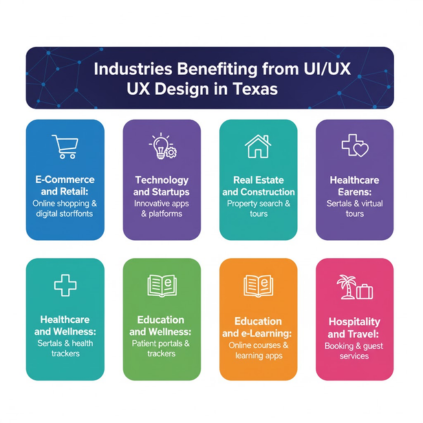
1. E-Commerce and Retail
E-commerce brands in Texas are thriving — and their success often depends on how intuitive and enjoyable their online shopping experience feels. Smart UI/UX design ensures that customers can easily browse products, compare prices, and check out smoothly, no matter what device they’re using.
Features like quick-loading product pages, secure payment flows, and personalized recommendations can turn casual browsers into loyal shoppers. A beautifully designed interface not only boosts conversion rates but also strengthens customer trust — a must-have in today’s competitive online retail market.
2. Technology and Startups
The Texas tech scene, especially in Austin, is growing at lightning speed. Startups focused on SaaS, mobile apps, and cloud solutions rely heavily on UI/UX to stand out in crowded markets. A well-thought-out design simplifies complex processes and helps users quickly understand the product’s value.
For tech startups, a clean and functional design can mean the difference between rapid adoption and abandonment. Intuitive onboarding, logical navigation, and visually appealing dashboards all help create seamless user experiences that attract investors and retain customers.
3. Real Estate and Construction
From interactive property listings to project management dashboards, the real estate and construction sectors in Texas are transforming through digital platforms. Effective UI/UX design enables potential buyers or clients to view listings, take virtual tours, and access pricing information effortlessly.
For construction firms, internal apps with user-friendly dashboards and project-tracking interfaces improve collaboration and efficiency. A visually structured design minimizes confusion and ensures all project stakeholders stay on the same page.
4. Healthcare and Wellness
Texas healthcare providers and telemedicine startups are increasingly investing in patient-focused digital solutions. From scheduling appointments to viewing medical records, healthcare apps must prioritize simplicity and accessibility.
A strong UI/UX design ensures that users of all ages and backgrounds can navigate medical portals with confidence. This leads to better patient engagement, fewer errors, and improved overall care — reinforcing trust between patients and healthcare professionals.
5. Education and e-Learning
As education evolves toward hybrid and digital-first models, schools, universities, and e-learning startups in Texas need intuitive digital environments that make learning engaging and accessible.
A well-designed interface can enhance student participation, simplify content navigation, and provide interactive learning experiences. For teachers, clear dashboards and intuitive management tools reduce administrative work, allowing them to focus more on teaching and student support.
6. Hospitality and Travel
With Texas being a hub for tourism and business travel, UI/UX design plays a key role in the hospitality industry. From hotel booking apps to restaurant reservation systems, a seamless and visually appealing user experience helps businesses attract and retain customers.
Optimized booking flows, interactive maps, and responsive mobile designs make travel planning convenient and enjoyable — enhancing satisfaction and repeat business.
Even with the best intentions, many businesses across Texas struggle to create digital experiences that truly connect with their audience. A well-designed website or app doesn’t just look good — it functions smoothly, guides users effortlessly, and builds trust. However, several common mistakes can hurt usability, conversion, and customer satisfaction. Here’s what Texas tech companies, e-commerce brands, and service providers should watch out for:
1. Ignoring Mobile Optimization
In a state where mobile usage dominates online activity, overlooking mobile responsiveness can be a dealbreaker. Customers in Texas often browse, compare, and buy products on their phones.
A clunky mobile interface, slow load time, or misaligned buttons can quickly drive them away. A mobile-first approach ensures your digital platform performs beautifully across all screen sizes — giving users a consistent experience whether they’re on a smartphone, tablet, or desktop.
2. Overcomplicating Navigation
One of the biggest UI/UX pitfalls is poor navigation. If visitors can’t find what they’re looking for within a few clicks, they’ll leave. This is especially true for e-commerce sites where every second counts.
Menus that are too crowded, hidden links, or unclear categories confuse users. Instead, businesses should focus on intuitive layouts, clear hierarchy, and logical user flows that guide visitors naturally through the website or app.
3. Neglecting Loading Speed
Texas users — especially in competitive markets like Austin and Dallas — expect instant results. A visually stunning design means little if your page takes too long to load.
High-resolution images, unnecessary animations, or unoptimized code can slow down performance. Fast-loading sites not only retain visitors but also perform better in search rankings. Aim for simplicity, compression, and clean design elements that enhance speed and engagement.
4. Lack of Consistency in Design Elements
A disjointed look across pages — inconsistent fonts, mismatched colors, or unaligned buttons — can make your site feel unprofessional.
Consistency in design builds brand recognition and makes users feel comfortable navigating your digital space. Create a unified visual language with reusable components, a balanced color palette, and consistent typography to strengthen your brand identity.
5. Overlooking Accessibility
An inclusive design isn’t just ethical — it’s essential. Many Texas-based businesses fail to consider accessibility features such as alt text for images, proper contrast ratios, or keyboard-friendly navigation.
When your site or app is accessible to people with disabilities, you open the door to a wider audience while also complying with ADA guidelines. Accessible design is good business — it shows you value every customer.
6. Ignoring User Feedback and Testing
A surprising number of companies design their interfaces without real user testing. The result? Features that look good in theory but frustrate customers in practice.
Regular usability testing and feedback loops allow businesses to refine designs, fix pain points, and improve user satisfaction. It’s a continuous process — not a one-time task.
7. Prioritizing Aesthetics Over Functionality
A sleek interface is important, but if it confuses users or hides critical information, it fails its purpose. The best UI/UX design balances beauty with usability — ensuring that visuals enhance, not overshadow, the experience.
Texas brands aiming for long-term success must remember: good design solves problems; great design delights while doing so.
8. Neglecting Conversion Elements
In e-commerce especially, design directly impacts sales. Forgetting key conversion elements like clear CTAs (call-to-actions), trust badges, or simplified checkout processes can lead to lost revenue.
Strategic placement of CTAs, transparent policies, and minimal form fields can make a significant difference in converting visitors into loyal customers.
Every state has its unique personality — and Texas is no exception. Texans value authenticity, friendliness, and functionality. That means your digital design should reflect local values while maintaining universal usability.
Consider:
When your digital experience speaks directly to local preferences, it creates emotional resonance — turning users into loyal advocates.
Building the perfect user experience isn’t a one-person job — it requires expertise in psychology, technology, and design. Partnering with skilled designers and strategists ensures your digital products don’t just look good but perform flawlessly.
Whether you’re a tech startup in Austin or an e-commerce brand in Dallas, choosing the right design partner can make all the difference. That’s why businesses trust API DOTS, known for developing intuitive and conversion-driven interfaces that help Texas companies thrive online.
As digital ecosystems evolve, the line between technology and human experience continues to blur. Emerging trends are already reshaping the landscape:
For Texas tech and e-commerce industries, these advancements represent an exciting frontier — where innovation meets empathy, and design drives business excellence.
In a market as vibrant and competitive as Texas, UI/UX isn’t just a design choice — it’s a business strategy. By focusing on UI/UX designing in Texas, brands can create digital experiences that inspire loyalty, build trust, and boost growth across every touchpoint.
If you’re a local business, entrepreneur, or e-commerce brand in Texas looking to elevate your digital presence, now is the time to take action. Let expert designers help you craft experiences that delight users and drive measurable success.
We manage and optimize your IT infrastructure end-to-end.Ensuring stability, security, and operational continuity.
Consult IT Experts