
Top
Search
People also search for:

Stay Inspired with Instagram




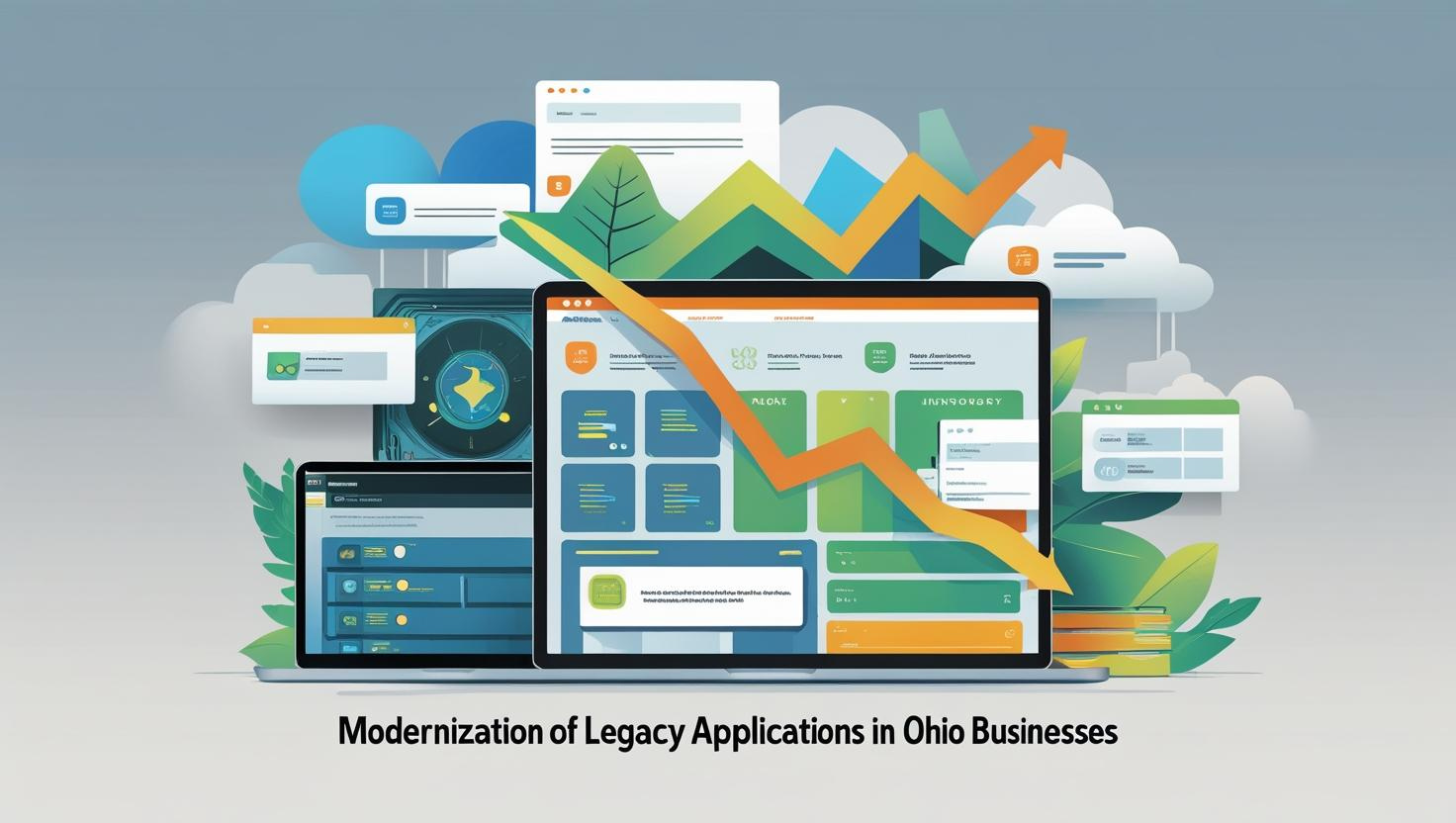
Ohio’s business landscape is evolving fast, with sectors like manufacturing, healthcare, logistics, and financial services relying more than ever on technology to stay competitive. Yet, many organizations in the state are still running on legacy systems — outdated software and infrastructure that limit agility, security, and innovation.
In 2025, legacy system replacement in Ohio isn’t just a technology upgrade; it’s a survival strategy. Businesses that fail to modernize risk being overtaken by more agile competitors, not just within Ohio, but also in states like Texas, Florida, and North Carolina, where digital transformation initiatives are already years ahead.
Old systems often require manual processes, which slow down workflows and increase labor costs. For example, a manufacturing company in Cleveland might still rely on a 15-year-old ERP system that doesn’t integrate with modern supply chain software. Meanwhile, competitors in Indiana and Michigan are using AI-enhanced platforms that automate order processing and predictive maintenance.
Legacy applications lack modern cybersecurity features, making them prime targets for ransomware and data breaches. In 2024, Ohio businesses reported a 27% increase in cyberattacks targeting outdated software — a number that aligns with similar trends in Pennsylvania and Illinois, where industries with high volumes of customer data remain top targets.
With regulations like HIPAA, PCI DSS, and state-level privacy laws, old systems may fail to meet compliance standards. This is especially problematic in Ohio’s healthcare and financial sectors, where penalties can be severe. By comparison, California’s modernization efforts have allowed businesses to meet new data governance requirements with minimal disruption.
Application modernization is the process of upgrading legacy software to newer frameworks, architectures, and infrastructure. It’s more than a technology swap — it’s a digital transformation in Ohio that can reshape how companies operate, innovate, and grow.
Key modernization approaches include:
Ohio’s manufacturing sector, especially in cities like Toledo and Akron, is adopting Industrial IoT and AI-driven analytics. However, these tools require modern application platforms. Legacy system replacement in Ohio manufacturing plants is helping integrate real-time machine monitoring, predictive maintenance, and automated supply chain management. Similar initiatives in Michigan’s automotive sector show how modernization can reduce downtime by up to 40%.
Hospitals and clinics in Columbus and Cincinnati are modernizing patient management systems to improve care coordination and compliance with federal regulations. Cloud migration strategies in North Carolina’s healthcare sector provide a model for secure telemedicine expansion — a trend Ohio providers are now emulating.
Banks and credit unions in Cleveland are adopting API-first architectures to offer better mobile banking experiences. Application modernization in Ohio financial institutions is critical to compete with fintech disruptors from New York and California, which already provide AI-powered loan approvals and real-time fraud detection.
With modern systems, businesses can adapt to market changes faster. For example, an e-commerce company in Dayton could deploy new features in weeks instead of months, similar to retail innovators in Texas that quickly pivoted to curbside pickup during the pandemic.
Modern platforms come with built-in encryption, multi-factor authentication, and continuous security updates. This is crucial for Ohio’s government contractors, who must comply with CMMC requirements, similar to aerospace companies in Virginia.
While modernization requires upfront investment, it reduces long-term costs by lowering maintenance expenses, eliminating licensing fees for outdated software, and improving energy efficiency. Cloud migration in Florida has shown businesses can cut IT costs by up to 35% over three years.
Modernized applications allow for faster response times, personalized services, and seamless multi-channel interactions. This is evident in Illinois, where modern banking platforms have increased customer retention by 20%.
Moving to the cloud is one of the most effective modernization approaches, but success requires careful planning.
Platforms like AWS, Microsoft Azure, and Google Cloud offer scalability and flexibility. Application modernization in Ohio often starts here, especially for startups and SMBs. In Nevada, public cloud adoption has driven rapid fintech growth by reducing infrastructure barriers.
A mix of on-premises and cloud-based systems allows for greater control and security. Ohio’s healthcare providers are particularly drawn to this model, similar to Maryland, where hybrid cloud adoption supports HIPAA compliance.
Using multiple providers prevents vendor lock-in and enhances redundancy. Large manufacturers in Ohio are beginning to explore this approach, following the example of Arizona’s aerospace industry.
Modernizing legacy applications is not just a technical task — it’s a business transformation initiative. For Ohio companies in sectors like manufacturing, healthcare, finance, and logistics, the process requires careful planning and execution. Here’s how to approach it effectively:
Before making any changes, conduct a thorough audit of all existing applications, infrastructure, and integrations.
For example, a Cleveland-based healthcare provider might discover that its patient management software is 12 years old, lacks telehealth capabilities, and is incompatible with HIPAA-compliant cloud services. This mirrors the approach in North Carolina, where healthcare organizations started their modernization journey with compliance-driven audits to avoid regulatory penalties.
Not every application needs a full rebuild — some can be replatformed or refactored.
In Ohio, financial institutions in Columbus have chosen a hybrid approach — replatforming customer-facing systems for faster rollouts, while rearchitecting internal platforms for long-term flexibility. Similar strategies have succeeded in Texas, where banks adopted microservices to reduce product launch times from months to weeks.
The best technology won’t help if teams don’t know how to use or maintain it.
Ohio companies can take inspiration from Indiana, where public-private partnerships have created cloud training bootcamps to address skill gaps in manufacturing IT teams.
A pilot project allows businesses to test modernization benefits without risking large-scale disruption.
A logistics firm in Dayton, for instance, ran a six-month pilot to migrate its shipment tracking platform to a hybrid cloud, similar to Florida’s retail sector, where gradual cloud adoption minimized downtime and boosted customer satisfaction.
Application modernization in Ohio often fails when decision-makers and end-users aren’t aligned.
This approach mirrors the California model, where modernization projects are tied directly to measurable business KPIs, making it easier to secure funding and executive approval.
While Ohio has made steady progress in modernizing legacy applications, other U.S. states have pioneered strategies that can serve as valuable blueprints. By studying these success stories, Ohio businesses and policymakers can accelerate their own digital transformation initiatives and avoid common pitfalls.
California, particularly Silicon Valley, is a leader in microservices architecture — breaking large, monolithic applications into smaller, independent services that can be developed, deployed, and scaled separately.
Lesson for Ohio: Businesses in Columbus, Cleveland, and Cincinnati can apply this model to retail, healthcare, and manufacturing platforms. By modularizing applications, Ohio companies can update supply chain tracking tools, patient portals, or e-commerce features without causing service downtime.
Texas has created strong collaborations between the state government, universities, and private tech incubators to support small and medium-sized enterprises (SMEs) in their modernization efforts.
Lesson for Ohio: Similar partnerships between the Ohio Development Services Agency, local universities, and tech accelerators could make application modernization in Ohio more accessible to small businesses, especially in traditional industries like agriculture and manufacturing.
North Carolina has taken a targeted approach by creating sector-specific modernization programs, particularly for healthcare and financial services — two industries with heavy compliance requirements.
Lesson for Ohio: Ohio’s healthcare providers in Dayton and Toledo, as well as banks in Cleveland, could benefit from similar pre-defined modernization roadmaps that account for HIPAA, PCI DSS, and local privacy laws.
Florida has aggressively pushed for a cloud-first approach across both public and private sectors, requiring that new applications be cloud-native unless there’s a compelling reason otherwise.
Lesson for Ohio: State-level incentives for cloud migration could accelerate Ohio’s modernization timeline, particularly in rural areas where on-premises infrastructure is costly to maintain.
By 2025, Ohio’s most competitive businesses will have completed significant modernization projects, replacing legacy systems with cloud-native, API-driven platforms. These changes will support advanced analytics, real-time decision-making, and automation, putting Ohio companies on equal footing with tech leaders in other states.
The choice for Ohio businesses is clear:
Application modernization isn’t just a technology trend — it’s the foundation of Ohio’s future economic growth. Whether it’s legacy system replacement in Ohio, cloud migration strategies, or a full digital transformation in Ohio, the businesses that act decisively today will own the competitive edge tomorrow.
As other states accelerate their modernization efforts, Ohio must commit to transforming its legacy infrastructure into a platform for innovation, security, and long-term success.
We design and develop secure, high-performance web and mobile applications.Ensuring scalability, reliability, and long-term product success.
Hire App Developers