
Top
Search
People also search for:

Stay Inspired with Instagram




Healthcare organizations across Pennsylvania—from large hospital networks in Philadelphia and Pittsburgh to community clinics in Harrisburg, Allentown, Scranton, and Erie—are undergoing a rapid digital transformation. As patient volume rises and compliance expectations intensify, the traditional IT models that once supported healthcare operations are no longer enough.
Today, clinics, hospitals, diagnostic labs, telehealth providers, and pharmaceutical companies need systems that are secure, scalable, and able to integrate seamlessly with evolving technologies. That’s exactly where the hybrid cloud steps in.
Hybrid cloud solutions combine the stability and security of private infrastructure with the flexibility and innovation of public cloud environments. For healthcare organizations in Pennsylvania, this architecture offers unmatched resilience, compliance, and operational efficiency—without demanding a full migration or risking disruption to patient care.
As a technology partner offering modern cloud solutions, we work closely with healthcare providers to design architectures that improve performance, reduce risk, and streamline medical workflows. This blog explores how hybrid cloud is reshaping healthcare operations statewide, how it helps you stay compliant, and how our team can guide you through every step of the transformation.
Healthcare professionals in Pennsylvania face unique challenges:
The hybrid cloud addresses all these challenges in a way that neither fully on-premise nor fully public cloud systems can match.
This is why cloud services in Pennsylvania have grown rapidly across healthcare settings—providers want flexibility, but not at the cost of compliance or security.
Hybrid cloud creates a bridge between your existing systems and modern cloud capabilities. Instead of forcing you to choose between a private or public cloud, it blends both into a cohesive environment tailored to your needs.
Healthcare infrastructure in Pennsylvania spans multiple systems—urban hospitals, university medical centers, rural clinics, and research labs. Each has varying IT maturity levels, staffing capacity, and operational requirements.
Because it blends flexibility with control, hybrid cloud perfectly fits how healthcare services are delivered across the state.
Healthcare facilities across Pennsylvania manage an enormous volume of daily operations—from appointment scheduling and diagnostic imaging to lab coordination, billing cycles, telemedicine sessions, and secure data storage. A hybrid cloud model strengthens these operations by modernizing backend infrastructure while allowing hospitals and clinics to continue using their existing systems without interruption.
Electronic Health Records (EHRs) are at the core of every clinical workflow, and they require rapid access, airtight security, and seamless integration with external systems. A hybrid cloud setup makes this possible by allowing the most sensitive patient data to remain securely stored within a private cloud environment while shifting non-critical components, such as appointment notifications or basic patient updates, to the public cloud.
This balanced approach improves system performance, enables physicians and staff to access medical data securely from any location—especially helpful for telemedicine and multi-clinic networks—and removes delays that typically slow down clinical decision-making and administrative tasks.
Modern healthcare imaging tools like CT scans, MRIs, and X-rays generate extremely large files that require specialized infrastructure to process and store efficiently. Hybrid cloud technology enhances imaging workflows by enabling fast local access to scan data, while cloud-based computing power accelerates analysis, rendering, and reporting.
In addition, cloud storage options allow healthcare providers to maintain cost-effective, scalable, and compliance-backed imaging archives. This eliminates the need for hospitals to continuously invest in expensive on-premises hardware, reducing operational costs while improving turnaround time for diagnostics.
Telehealth adoption across Pennsylvania has grown significantly, and hybrid cloud systems play a major role in supporting smooth virtual care. By leveraging both private and public cloud resources, telemedicine platforms can deliver low-latency video consultations, secure patient–doctor communication, and real-time synchronization of remote monitoring data directly into EHR systems.
This ensures that medical professionals always have the latest patient information at their fingertips, enabling quicker decisions and enhanced remote care experiences. Patients benefit from shorter response times and uninterrupted virtual sessions, even during peak traffic hours.
Unexpected events such as power failures, cyberattacks, or natural disasters can severely disrupt medical services. Hybrid cloud mitigates these risks with built-in resilience mechanisms. In the event of a failure, automated failovers activate instantly, shifting critical operations to backup systems hosted in the cloud.
Remote and secure off-site backups ensure that patient data remains protected, accessible, and recoverable. Instead of dealing with downtime measured in days, healthcare providers can restore operations within minutes, safeguarding both patient safety and organizational productivity.
For healthcare providers in Pennsylvania, compliance is not just a requirement—it is a critical foundation of delivering trustworthy patient care. Every interaction—from storing Protected Health Information (PHI) to managing patient consent forms or maintaining audit-ready documentation—must align with strict state and federal regulations. A hybrid cloud environment gives healthcare organizations the structure, flexibility, and control needed to meet these obligations while still upgrading their digital capabilities.
Hybrid cloud combines the security of private infrastructure with the efficiency of public cloud services, ensuring that hospitals and medical networks can protect sensitive information while improving overall performance. This balance makes it easier to stay compliant without slowing down operations or innovation.
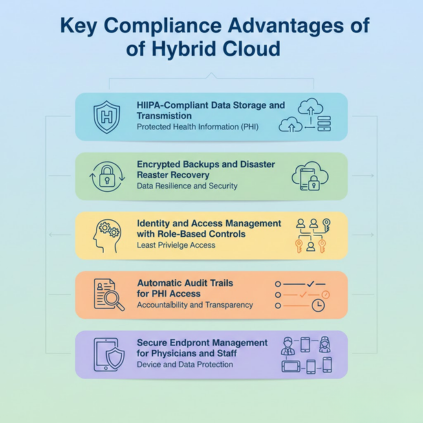
HIPAA-Compliant Data Storage and Transmission
Hybrid cloud environments support HIPAA-aligned security frameworks, ensuring PHI is encrypted during storage and transmission. Sensitive data—such as patient histories, lab results, or insurance information—remains protected within the private cloud, while less-sensitive workloads can be processed on the public cloud. This reduces risk while meeting regulatory obligations.
Encrypted Backups and Disaster Recovery
Backup and disaster recovery protocols are essential for healthcare compliance. Hybrid cloud provides encrypted storage for backups, ensuring all recovery data is protected from unauthorized access. In the event of a cyberattack, system failure, or natural disaster, secure cloud-based recovery points help restore services quickly while maintaining compliance documentation.
Identity and Access Management with Role-Based Controls
Healthcare staff operate across multiple systems, departments, and devices. Hybrid cloud integrates robust identity and access management (IAM) tools that assign permission levels based on roles—physicians, nurses, administrators, billing staff, and so on. This ensures that only authorized users can access PHI, reducing internal risks and supporting HIPAA’s least-privilege requirements.
Automatic Audit Trails for PHI Access
Auditability is a major compliance requirement. Hybrid cloud platforms automatically record who accessed patient data, when they did it, and what actions were taken. These logs create tamper-proof audit trails that help healthcare organizations demonstrate compliance during inspections, internal audits, or legal reviews.
Secure Endpoint Management for Physicians and Staff
Because healthcare professionals use a variety of devices—laptops, tablets, mobile phones—endpoint security is essential. Hybrid cloud systems centralize endpoint monitoring, enforce security policies, and ensure every connected device meets compliance standards. This prevents unauthorized access and reduces vulnerabilities across distributed clinical teams.
Cyberattacks targeting healthcare systems have surged in recent years, making hospitals one of the most targeted sectors in the United States. Ransomware alone has cost healthcare providers billions of dollars in downtime, data recovery, and operational disruption. Pennsylvania healthcare facilities—ranging from small outpatient clinics to large hospital networks—face the same risks.
With patient data becoming more valuable on the black market, the pressure to strengthen cybersecurity has never been greater.
Hybrid cloud architecture addresses this challenge with a modern, defense-driven approach that blends advanced security controls with the flexibility needed for day-to-day healthcare operations.
Multi-Layered Firewalls
Hybrid cloud solutions support layered firewall systems that screen both internal and external traffic. This provides multiple checkpoints before data ever reaches critical systems, significantly reducing exposure to malicious traffic and unauthorized access attempts.
AI-Driven Intrusion Detection
Traditional monitoring tools often fail to detect complex threats. Hybrid cloud platforms leverage AI and machine learning to recognize unusual patterns, predict emerging threats, and automatically alert administrators. This proactive threat detection helps stop an attack before it spreads through the network.
Encrypted Data Channels
Whether data is being transferred between hospital departments, synced with an EHR, or stored for long-term compliance, encryption is essential. Hybrid cloud environments ensure all communication channels are fully encrypted, preventing attackers from intercepting or tampering with patient information.
Zero-Trust Access Policies
Zero-trust means no one—inside or outside the network—is trusted by default. Every user, device, and application must authenticate before gaining access. Hybrid cloud infrastructure supports continuous verification, reducing the risk of internal misuse or compromised credentials.
Real-Time Monitoring Across Systems
Healthcare systems operate 24/7, and so do cyber threats. Hybrid cloud platforms provide real-time monitoring across both public and private cloud environments. This ensures immediate visibility into unusual activity, unauthorized access attempts, or system failures—allowing rapid response and containment.
Segmented Networks to Contain Threats
Network segmentation isolates critical systems such as EHR databases, imaging servers, billing platforms, and telehealth tools. If a breach occurs in one segment, hybrid cloud architecture prevents the attacker from moving laterally and reaching sensitive patient data, greatly reducing overall damage
Modern healthcare increasingly relies on data to guide decisions, improve patient outcomes, and streamline operations. From AI-driven diagnoses to automated scheduling systems, advanced technologies require strong computing power and flexible infrastructure—something traditional, on-premise setups often struggle to deliver.
Hybrid cloud environments give Pennsylvania healthcare organizations the scalability and speed needed to adopt these innovations without disrupting their current workflows.
Predictive Analytics
Hospitals use predictive analytics to anticipate patient admissions, prevent readmissions, and identify early signs of deteriorating health. Hybrid cloud provides the processing power required to analyze large datasets quickly and accurately, helping clinicians make informed decisions at the right time.
AI-Assisted Diagnostics
AI tools used for reading imaging scans, detecting abnormalities, or recommending treatment paths require high computational capacity. Hybrid cloud environments can run these intensive workloads in the public cloud while keeping sensitive patient data securely stored in the private cloud, ensuring both speed and compliance.
Operational Forecasting
From forecasting staff needs to predicting medication shortages, forecasting models depend on constant data analysis. Hybrid cloud supports dynamic resource scaling so healthcare organizations can run complex simulations without investing in new hardware.
Real-Time Patient Monitoring
Wearables, remote monitoring tools, and in-hospital IoT devices generate continuous streams of data. Hybrid cloud ensures this information is captured, processed, and delivered to clinicians in real time—enabling quicker interventions and improving overall patient safety.
Smart Scheduling
AI-powered scheduling systems optimize appointment times, reduce patient wait times, and balance physician workload. Hybrid cloud hosting ensures these systems remain responsive and available across multiple departments and locations.
Population Health Management
Managing population-level data—including chronic disease trends, vaccination coverage, and community risk patterns—requires large-scale data storage and analysis. Hybrid cloud platforms allow Pennsylvania’s healthcare providers and public health agencies to run these analyses efficiently and securely.
Choosing, implementing, and managing hybrid cloud solutions isn’t a DIY process—especially in a sensitive field like healthcare.
Partnering with a service provider ensures you are supported at every stage.
This is where hybrid cloud consulting becomes crucial in ensuring your technology investment delivers measurable improvements.
As a cloud solutions provider, we design, deploy, and manage hybrid cloud environments for healthcare organizations of all sizes. Our approach is centered on reliability, security, compliance, and performance.
We tailor solutions for hospitals, clinics, telehealth providers, research institutions, and healthcare networks across Pennsylvania.
Our services also extend to advanced solutions such as:
This is how modern healthcare systems succeed—through smart, secure cloud technology.
Here’s how our hybrid cloud solutions have transformed operations for healthcare organizations in Pennsylvania:
Case Example 1: Multi-Site Healthcare Network in Philadelphia
Case Example 2: Rural Hospital in North-Central Pennsylvania
Case Example 3: Telemedicine Provider in Pittsburgh
The future of healthcare in Pennsylvania is becoming more hybrid, intelligent, and hyper-connected, driven by shifting patient expectations, evolving regulations, and rapid breakthroughs in digital health. As the industry advances, healthcare organizations must rely on technology that can adapt quickly while ensuring reliability, compliance, and seamless patient experiences. Hybrid cloud plays a critical role in making this transformation possible.
Over the next few years, healthcare providers across Pennsylvania will require IT ecosystems that support:
AI is reshaping the way clinical decisions are made—from reading imaging scans to identifying disease patterns that are invisible to the human eye. These technologies demand immense computing resources and continuous data availability. Hybrid cloud makes this feasible by offering on-demand scalability and secure environments for storing and processing clinical data. Providers can adopt AI tools without overwhelming their on-premise systems.
The shift toward personalized medicine requires access to detailed patient histories, genetic data, lifestyle information, and real-time health metrics. Hybrid cloud environments allow healthcare systems to manage and analyze these large datasets accurately and efficiently. This supports more customized treatment plans, earlier interventions, and improvements in overall patient outcomes.
More patients are embracing remote care—especially seniors, chronic disease patients, and rural communities. Devices that track vitals, glucose levels, heart rate, and other metrics produce continuous streams of information. Hybrid cloud ensures this data is collected and transmitted securely while giving physicians immediate access to actionable insights. This leads to better preventative care and reduces unnecessary hospital visits.
Healthcare teams need access to patient data from multiple locations—whether they’re visiting clinics, working remotely, or supporting field operations. Patients also expect mobile-friendly portals for scheduling appointments, accessing test results, or communicating with doctors. Hybrid cloud infrastructure supports mobile-first workflows by enabling fast, secure access to apps and databases across devices and locations.
Whether predicting emergency room traffic or monitoring medication performance, real-time analytics is becoming essential. Hybrid cloud allows large datasets to be processed instantly, helping healthcare leaders make quicker decisions. This improves staffing, reduces wait times, strengthens administrative planning, and enhances the accuracy of clinical operations.
The healthcare landscape is continuously influenced by evolving federal and state regulations. Hybrid cloud environments make it easier for providers to remain compliant by offering built-in monitoring tools, automated updates, and secure record-keeping. As regulations grow more complex, hybrid cloud ensures organizations stay aligned without heavy manual effort.
Healthcare remains one of the most targeted sectors for cyberattacks. As threats increase in volume and sophistication, hybrid cloud offers layered security—including encryption, identity controls, and automated threat detection—to protect sensitive patient information. This strengthens resilience and reduces the risk of operational disruptions.
Hybrid cloud positions Pennsylvania healthcare institutions to embrace innovation without compromising stability. It ensures every system—whether clinical, administrative, or research-related—can scale to meet demand while reducing costs and strengthening security.
As the need for cloud services in Pennsylvania continues to grow, hospital networks, clinics, telemedicine providers, and research institutions are recognizing the urgency to modernize now instead of waiting for systems to become outdated or overwhelmed.
Hybrid cloud is not just a technology upgrade; it’s a strategic investment that future-proofs healthcare operations and creates a foundation for smarter, more connected patient care statewide.
Healthcare clients choose us because we offer:
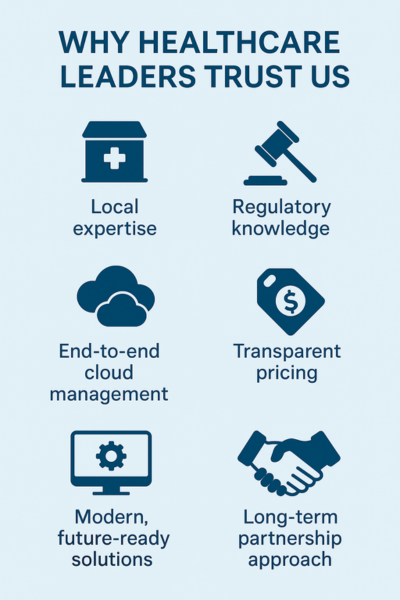
We bring technology that truly improves your day-to-day operations—not just theory, but measurable results.
And with experience working with both small clinics and major networks, we understand what it takes to modernize healthcare safely and effectively.
If your healthcare organization wants to improve performance, strengthen security, meet compliance standards, and modernize operations, hybrid cloud is the ideal solution. It blends the best of both worlds—control and flexibility, security and scalability.
As the demand for cloud services in Pennsylvania increases, choosing the right partner ensures your technology supports better patient care and long-term strategic growth.
API DOTS is here to support healthcare providers across Pennsylvania with reliable, compliant, and high-performance cloud solutions tailored to your needs. With our expertise and hybrid cloud consulting, we help you transition smoothly and confidently into a more advanced digital ecosystem.
We manage and optimize your IT infrastructure end-to-end.Ensuring stability, security, and operational continuity.
Consult IT Experts