
Top
Search
People also search for:

Stay Inspired with Instagram




In boardrooms across the USA, Canada, Europe, the UK, Australia, and Singapore, healthcare leaders are confronting one defining question: Are we digitally prepared for the expectations of today’s patient and the pressures of modern value-based care? For many Chief Executive Officers, Chief Information Officers, and Chief Operating Officers, the honest answer is increasingly clear—not yet.
This gap between patient expectations and hospital capabilities is widening rapidly. The era where mobile apps were considered optional add-ons is long gone. Today, hospital app development has become a foundational pillar of digital transformation, shaping how care is accessed, delivered, and experienced. This is no longer a peripheral IT initiative; it is a strategic investment that dictates the future competitiveness of every healthcare institution.
Across global healthcare markets—from technologically advanced systems like Singapore to value-driven models in the UK and Australia—mobile health adoption is accelerating at an unprecedented pace. The healthcare mobile app market is projected to grow exponentially over the next decade, driven by consumer demand for real-time, accessible, and personalized care experiences. Hospitals that delay digital adoption risk not only operational inefficiencies but also a decline in patient loyalty, satisfaction, and market share.
This comprehensive guide is written specifically for CXOs. Its purpose is to illuminate the strategic imperative behind hospital mobile apps, uncover the latest healthcare app trends, and explain how features, integrations, and compliance protocols directly impact ROI. The aim is simple: to empower healthcare executives with clarity—so they can make informed, future-ready decisions that elevate both patient experience and organizational performance.
Healthcare has long struggled with outdated workflows—paper forms, long queues, manual requests, fragmented communication, and siloed data. Meanwhile, patients have grown accustomed to seamless digital experiences in banking, travel, hospitality, and retail—industries where convenience is non-negotiable.
This digital-first expectation has infiltrated the healthcare world. Patients today want to manage appointments, access records, chat with clinicians, receive reminders, and track progress—all from their smartphones. A major study revealed that 64% of patients prefer a healthcare provider offering strong digital tools, including mobile apps. This shift signifies more than a preference. It signals a competitive mandate.
For CXOs, adopting hospital app development is not merely about keeping up with technology; it is about bridging the digital divide. A customized hospital app creates a unified, seamless ecosystem that enables efficient workflows, strengthens provider-patient relationships, and dramatically improves operational visibility.
Hospitals in the USA and Canada report double-digit reductions in administrative tasks through digital automation. Healthcare networks in the EU and the UK are leveraging mobile platforms to modernize aging infrastructure and meet stringent regulatory demands around interoperability and data access. And in digital-forward regions like Singapore, mobile-first healthcare is becoming the default model of patient engagement.
In short, the global direction is clear: hospitals must transition from fragmented, paper-driven workflows to integrated mobile ecosystems to remain competitive in a rapidly evolving healthcare landscape.
A modern hospital app is not just a tool—it becomes the digital front door for the entire health system. It sits at the center of the patient-provider ecosystem and influences every touchpoint of care.
For Patients:
The app simplifies engagement, eliminating friction and confusion:
Across Europe and Australia, patient satisfaction surveys consistently show that mobile access significantly improves overall experience and loyalty.
For Providers and Staff:
A modern app dramatically reduces administrative burden:
Reports from HIMSS show that digital automation reduces administrative workload by up to 45%, freeing staff to focus more on delivering care.
By consolidating services into a single secure app, hospitals create a more coordinated, data-rich, and patient-centric environment. This leads to measurable improvements in efficiency and outcomes—results CXOs cannot ignore.
To create a future-proof ecosystem, CXOs must understand the latest healthcare app trends shaping digital transformation across USA, UK, Europe, Singapore, Australia, and Canada. Two major advancements stand out: artificial intelligence and remote patient monitoring.
AI in Hospital App Development: Transforming Engagement and Efficiency
AI is redefining how hospitals engage patients, manage operations, and deliver personalized care. It is no longer experimental—it is a practical necessity.
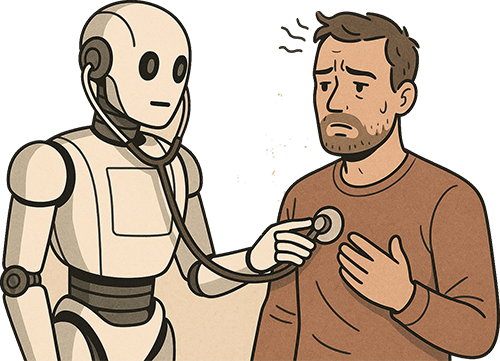
AI-driven triage tools analyze user-reported symptoms, medical history, and behavioral inputs to recommend appropriate next steps.
This not only increases patient safety but significantly reduces unnecessary ER visits.
AI chatbots handle:
In markets like the USA and Singapore, AI chatbots are reducing call center dependency by over 30%.
Doctors can use conversational AI to automatically generate visit summaries, reducing after-hours documentation work and avoiding physician burnout.
AI offers genuine, transformative value in hospital app development—value that aligns directly with executive priorities.
Hospitals in Canada, UK, Europe, and Australia are aggressively adopting remote patient monitoring apps to manage chronic conditions more effectively and reduce avoidable readmissions.
RPM integrates:
Real-time data alerts clinicians when metrics fall outside normal ranges, allowing proactive interventions that significantly improve outcomes.
Numerous studies show that RPM reduces readmissions, improves long-term outcomes, and strengthens the continuity of care. These benefits directly contribute to the ROI of hospital mobile apps, making RPM a high-impact investment.
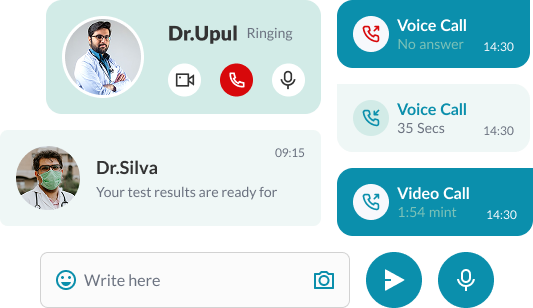
A high-performing hospital app must go beyond basic functionality. It must be an enterprise-grade ecosystem, deeply integrated with internal systems, secure, user-friendly, and scalable.
Below are the high-impact features and integrations CXOs must mandate.
These features go beyond convenience—they address operational inefficiencies and patient satisfaction gaps across the USA, UK, Australia, Europe, Singapore, and Canada.
Automated scheduling tools reduce no-shows by up to 40% and ensure doctors’ time is maximally utilized.
Modern telehealth provides immediate access for rural patients, working professionals, and elderly populations.
Effective telemedicine app integration supports:
Medication adherence is one of the biggest challenges in chronic care.
Smart reminders and refill alerts significantly improve patient safety and reduce hospitalizations.
A digital payment workflow accelerates revenue cycles and reduces administrative follow-up.
These features align with value-based care models and reduce friction throughout the patient journey.
This is the absolute cornerstone of hospital app development.
Integration with systems like:
ensures clinicians can access patient history, lab reports, and imaging results instantly. For CXOs, this means:
This is essential for RPM.
Data from devices feeds continuously into the hospital app, creating a full patient profile and enabling timely interventions.
Laboratory and radiology integrations ensure:
Hospitals across Singapore and Europe are already leveraging these integrations to improve care quality and reduce delays.
For executive leadership, the technology conversation must always tie back to financial outcomes. Fortunately, the ROI of hospital apps is measurable, compelling, and aligned with long-term strategy.
Top healthcare institutions globally report an estimated 30–50% ROI within 18–24 months of deploying a robust mobile app ecosystem.
A hospital app must be built with absolute security and full compliance. No exceptions.
Required for protecting PHI and preventing data breaches.
The app must be designed with:
Failure to comply can result in multi-million-dollar penalties and irreversible reputational damage.
1. How long does it take to develop a hospital app?
4–6 months for an MVP, 9–18 months for a fully integrated enterprise app.
2. How do we ensure adoption among patients and staff?
Focus on a frictionless interface, real utility, and thorough staff training.
3. What is the biggest risk of NOT building a hospital app?
You lose competitiveness, operational efficiency, and the ability to thrive under value-based care.
Hospital app development represents a defining opportunity for healthcare executives across the USA, Canada, UK, Europe, Singapore, and Australia. It is the gateway to higher patient satisfaction, operational efficiency, and organizational resilience. By prioritizing AI, telemedicine, RPM, strong integrations, and airtight compliance, CXOs can lead their institutions confidently into the future.
The technology is ready.
The patient demand is undeniable.
The competitive landscape is shifting.
| Digital leadership must come from the top—and the time is now.
We design and develop secure, high-performance web and mobile applications.Ensuring scalability, reliability, and long-term product success.
Hire App Developers
As a technology-driven web designer specializing in healthcare solutions, I create digital experiences that bridge the gap between medical professionals and modern patient expectations. With a strong focus on usability, interoperability, and future-ready interfaces, I design platforms that simplify clinical workflows, improve patient engagement, and support secure, data-driven healthcare ecosystems. My work blends clean UI/UX with practical healthcare insight, helping hospitals, clinics, and healthtech startups adopt smarter, more efficient, and patient-centric digital solutions.