Schedule a Free Strategy Session With Our Team Today
Looking for a team that can assist you in creating your product with a well-defined design process, adherence to deadlines, and delivery of an accurate end result? Look no further than API DOTS, who offer UI/UX design services. API DOTS boasts a small design studio within a larger software company, ready to assist you in developing an attractive and efficient product with ease and speed.
We conduct thorough user research and analysis to understand your target audience, behaviors, and needs. By gathering insights through surveys, interviews, and usability testing, we create data-driven design strategies that improve user satisfaction, streamline workflows, and drive measurable business growth effectively.
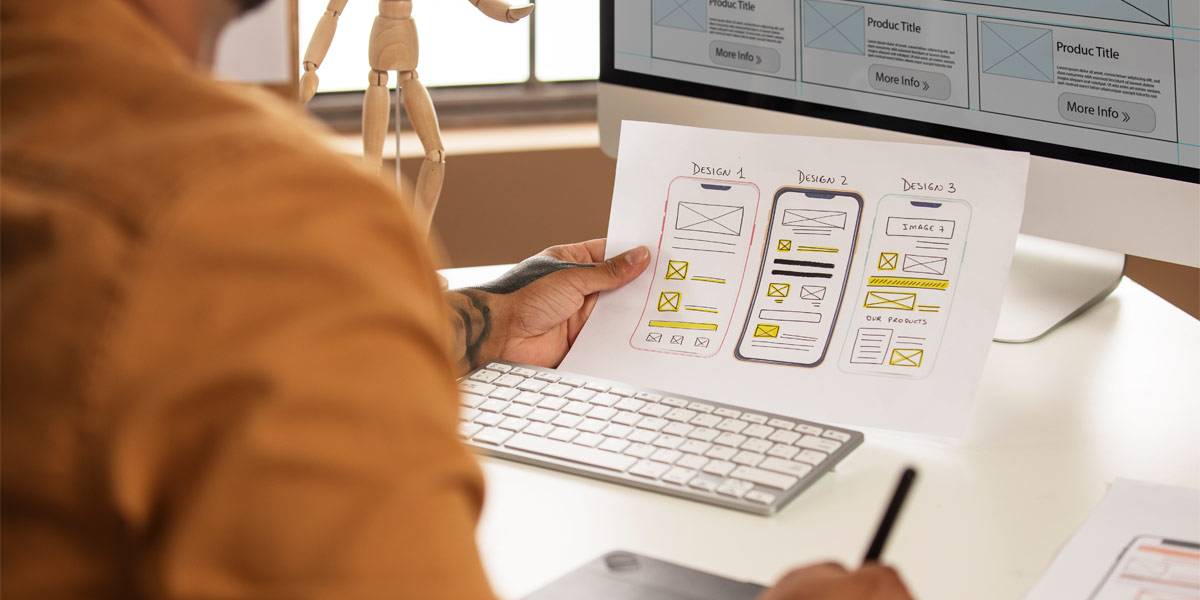
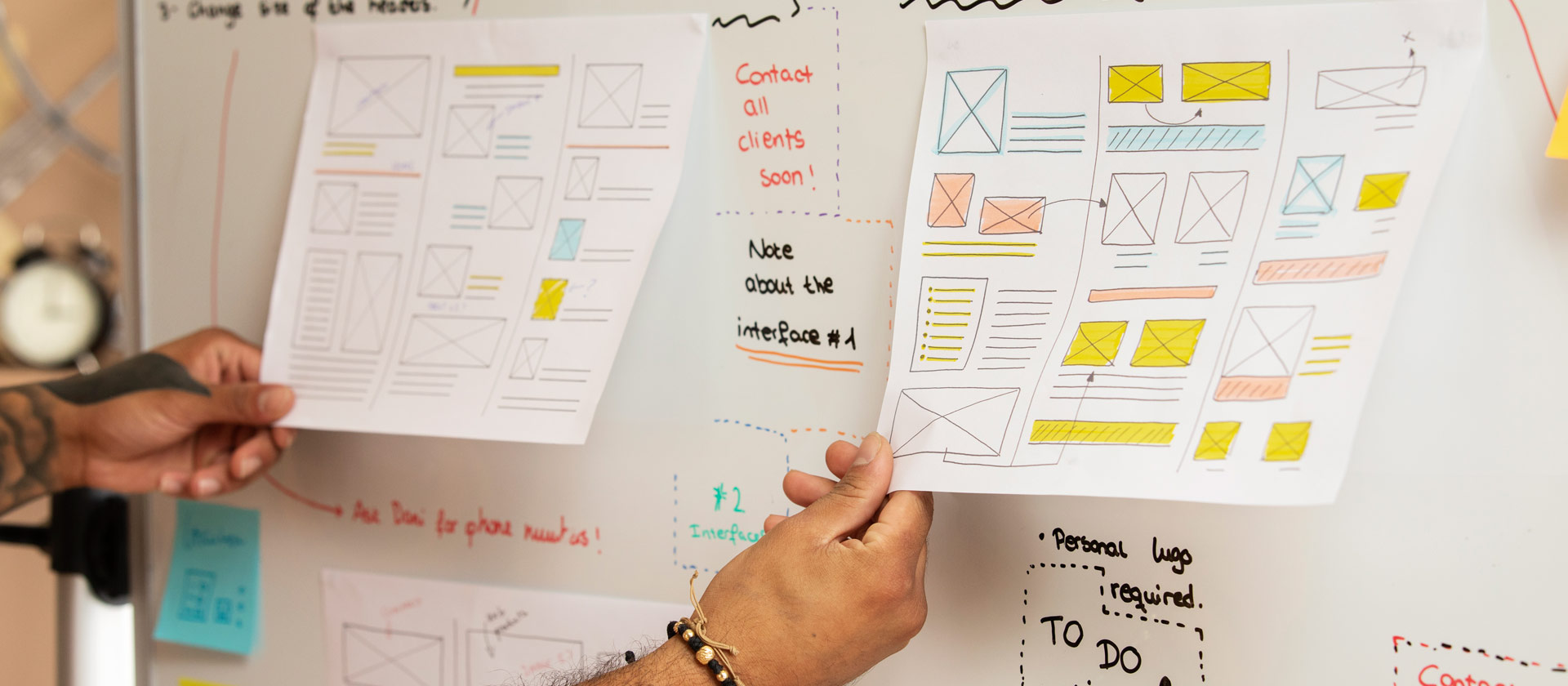
Our wireframing and prototyping services bring ideas to life with clear structures and interactive mockups. We validate design concepts early, reduce development risks, and ensure alignment with business goals, creating intuitive and engaging experiences before moving into high-fidelity design and final development execution.
We craft visually appealing UI designs that align with your brand identity while ensuring usability and accessibility. From color schemes and typography to iconography and layouts, our design approach ensures consistency, user engagement, and a polished digital experience across platforms and devices.
Our UX strategy services define clear user journeys and effective information architecture. We focus on organizing content logically and prioritizing user needs, enabling smooth navigation and accessibility. This ensures that digital products are intuitive, user-focused, and aligned with business goals for scalable growth.
Through rigorous usability testing, we identify friction points, gather feedback, and refine designs for maximum impact. Our iterative approach allows us to optimize interfaces continuously, ensuring every interaction feels effortless. This improves satisfaction, conversion rates, and long-term loyalty by delivering intuitive user experiences.
We design responsive and adaptive interfaces optimized for desktops, tablets, and mobile devices. With a focus on performance and consistency across platforms, our solutions enhance accessibility and usability, ensuring that users enjoy seamless experiences regardless of device, screen size, or operating system.
We understand that user experience (UX) can be a key differentiator for your brand. That’s why we offer UI/UX design services that ensure your UX is your X-factor. Here are some of the ways we help you stand out from the competition:
Customized UX design solutions that align with your business goals. Focus on user research and testing to ensure optimal user engagement. Expertise in creating responsive designs that work across all devices. Integration of the latest design trends and technologies to keep your brand relevant and modern. Dedicated team of designers and developers who work closely with you to bring your vision to life
A good user experience (UX) strategy starts with knowing what your audience wants and what they need. At API DOTS, we help companies make a user-centered experience strategy that takes all of these things into account. Our approach is to create an effective framework for the user experience that increases engagement, sales, and customer satisfaction. We work with our clients to make sure that the UX strategy fits with their business goals and vision.
Schedule a Free Strategy Session With Our Team Today

We are aware of how important product prototyping is to the design process. We provide a wide range of services to assist our clients in developing useful prototypes that are tailored to their particular requirements. We consider product prototyping to be a crucial step in making sure any product is successful. Before the final product is issued, we can find potential problems by testing and analysing the preliminary version of the product. This strategy results in a superior final product while saving time and resources.
We follow an end-to-end product development cycle that supports you at every stage of your digital journey:
We begin by understanding your business goals, target audience, and market trends. Through surveys, competitor analysis, and stakeholder interviews, we gather valuable insights that form the foundation of a user-centered design strategy.
Content and features are organized into a logical structure that supports intuitive navigation. This ensures users can easily find what they need, improving usability and creating seamless digital journeys across your product.
We create low-fidelity wireframes and interactive prototypes to visualize layouts and workflows. This step allows for early validation of ideas, minimizing risks before moving into high-fidelity design and development.
A strong visual identity is applied, combining colors, typography, imagery, and branding elements. The goal is to deliver an engaging and consistent look that aligns with your brand personality while enhancing user trust.
Interactive designs are tested with real users to identify friction points and opportunities for improvement. Feedback is used to refine the design, ensuring an intuitive experience that meets both user and business needs.
Finalized designs are handed over to developers with detailed specifications. Post-launch, we continuously analyze user behavior, apply feedback, and iterate on improvements to ensure the product evolves with changing demands.
Employee experiences reflect the strength of our culture. Their voices showcase motivation, trust, and connections that help us create a vibrant, supportive work environment.
“The supportive culture here has allowed me to balance personal commitments with professional goals, giving me the energy and motivation to consistently deliver my best work.”
“Collaboration feels natural because leadership encourages open communication. I’ve built meaningful relationships with colleagues that go far beyond the usual workplace interactions.”
“The vibrant environment blends professionalism with fun. Team activities and celebrations make each milestone memorable while still keeping our focus firmly on growth and innovation.”
Find clear answers to the most common questions about our services, process, and policies. If you can’t find the answer you’re looking for, simply click the button below to contact us directly anytime.
UI/UX design refers to two interconnected disciplines that focus on creating seamless digital experiences. UI (User Interface) design is all about the visual aspects of a product, including layouts, buttons, colors, icons, and typography. UX (User Experience) design, on the other hand, emphasizes how users interact with the product—ensuring it’s smooth, intuitive, and enjoyable. Together, UI and UX designing form the foundation of any successful digital product by making it both aesthetically pleasing and highly functional.
UI/UX design plays a critical role in the success of a business because it directly impacts user satisfaction, engagement, and conversion rates. A well-crafted UI/UX design makes a website or app easy to navigate, which helps reduce bounce rates and ensures users stay longer. Businesses that invest in effective UI/UX designing gain higher customer loyalty, stronger brand credibility, and improved sales, as customers are more likely to return to platforms that provide a positive user experience.
The core principles of UI design include consistency, clarity, feedback, and efficiency. Consistency ensures that design elements such as buttons, icons, and fonts remain uniform across all pages, providing users with a sense of familiarity. Clarity helps users understand the interface without confusion, while feedback reassures them by showing responses to their actions. Efficiency in UI designing allows users to complete tasks quickly and easily. These principles are crucial to building an interface that feels professional and user-friendly.
The UX design process involves a structured approach to creating meaningful digital experiences. It begins with research to understand user needs, behaviors, and challenges. Designers then create wireframes and prototypes to visualize potential solutions. This is followed by usability testing, where real users provide feedback on the design. Once validated, the final product is implemented and continuously evaluated for improvements. The UX designing process ensures that every decision made enhances usability, accessibility, and customer satisfaction.
While often used interchangeably, UI design and UX design serve distinct purposes. UI design focuses on how a product looks—its layout, colors, typography, and interactive elements. UX design, however, emphasizes how the product works and how users feel while interacting with it. Both UI and UX designing complement each other; even the most visually appealing design can fail if the user experience is poor, and a seamless experience can lose impact without an attractive interface.
UI/UX designers rely on several powerful tools to create, prototype, and test their designs. Popular choices include Figma, which is widely used for collaborative UI/UX designing; Adobe XD, ideal for wireframing and prototyping; Sketch, a favorite among interface designers; and InVision, which helps build interactive prototypes. These tools streamline the design process, improve collaboration between teams, and allow businesses to visualize and refine their products before development.
User research is the backbone of effective UI/UX designing, as it provides insights into user needs, preferences, and challenges. By studying user behavior and gathering feedback, designers can create solutions that are highly user-centric. This ensures that the final product aligns with customer expectations and eliminates pain points. Businesses that incorporate user research into their UI/UX design process develop products that are not only visually appealing but also practical, relevant, and impactful.
Usability testing is a crucial part of UI/UX designing that evaluates how real users interact with a product. It involves observing users as they complete tasks and identifying any difficulties they face. This process helps uncover design flaws, navigation issues, or confusing elements that may hinder the user experience. By addressing these problems early, businesses can ensure their websites or applications deliver an intuitive and efficient experience, ultimately improving customer satisfaction and retention.
Accessibility is a fundamental aspect of UI/UX designing that ensures digital products can be used by people with different abilities, including those with visual, auditory, or motor impairments. Designing with accessibility in mind means providing features like readable typography, proper color contrast, keyboard navigation, and screen-reader compatibility. Not only does accessibility make products more inclusive, but it also expands a business’s reach and helps meet legal compliance standards in many regions.
Collaboration between UI/UX designers and developers is essential to bringing digital products to life. While designers focus on creating visually appealing and user-friendly interfaces, developers ensure that these designs are technically feasible and functional. Regular communication, feedback exchanges, and iteration are vital in this process. When UI/UX designing teams and developers work hand in hand, the result is a product that not only looks great but also performs seamlessly, aligning design vision with technical execution.