
Top
Search
People also search for:
Stay Inspired with Instagram




It’s been interesting to watch artificial intelligence evolve from a promising technology into something that powers nearly everything I use daily, like search engines, creative tools, and productivity apps.
An article by Alex Reisner published in The Atlantic reflects an underlying conflict that affects everything about the artificial intelligence (AI) industry, including how we conceptualize these technologies and what it means for the legal and economic structures that support them.
Additionally, new work from Stanford and Yale has shown that a significant number of large language models can generate texts that closely resemble full copies of already copyrighted books, given appropriate prompts. This directly contradicts many prior industry assurances about these systems and raises serious questions about how they handle this material.
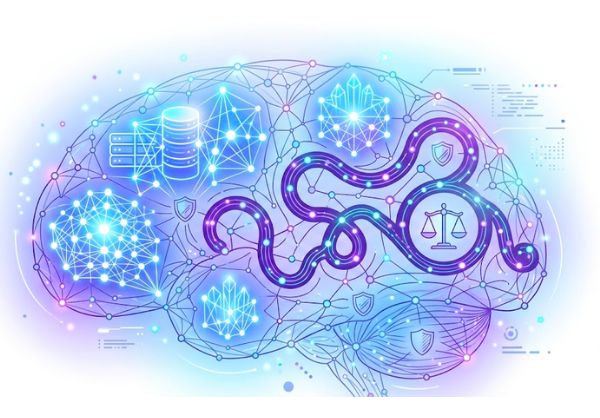
But the more we learned about how these systems actually work, the more we have realized there’s a technical and legal puzzle hiding beneath the surface: How much do these AI models actually remember from their training data?
This piece draws on and summarizes reporting by Alex Reisner (The Atlantic, via DNYUZ), with additional context from publicly available research on AI memorization.
Machine learning models were supposed to generalize from data learning patterns and statistical relationships without storing exact copies of what they’d seen. But deep learning systems, such as large language models, have overturned that assumption entirely.
What scholars are now documenting is striking: these models can encode and later reproduce substantial portions of their training data in near-verbatim form when prompted appropriately. This goes well beyond pattern learning it’s true memorization.
A key legal analysis, “The Files Are in the Computer,” draws a crucial distinction between this kind of memorization and basic statistical approximation, demonstrating that LLMs may retain identifiable training material that can be reconstructed later. This pushes the debate further into data privacy issues.
We are looking at AI memorization, creating three major challenges:
The Legal Reckoning
Copyright law was built for a world of physical books and digital files, not for neural networks that encode information in weights and parameters. The fact that models can reproduce large chunks of copyrighted material challenges the comfortable assumption that they merely compress or summarize information. This raises an uncomfortable question: Could the AI model itself be an unauthorized copy of protected content?
Right now, neither European nor U.S. legal frameworks have clear answers. We are watching debates unfold over whether training on copyrighted text qualifies as fair use, or whether exceptions like text and data mining should apply. These aren’t theoretical anymore, they’re live legal battles playing out in courts around the world.
2. Privacy and Security Risks
Memorization isn’t just about copyright. When we think about the massive web-scraped datasets these models train on, we worry about the sensitive personal information they might retain, data that was never meant for wider distribution. Privacy advocates and regulators are increasingly focused on this, pushing for mechanisms such as unlearning algorithms and training schemes to prevent verbatim retention.
3. The Technical Tradeoff
Here’s where it gets complicated: memorization isn’t entirely bad. LLMs often rely on memorized knowledge to answer factual questions or handle rare patterns, which makes them more useful. The problem is when memorization becomes unintentional or uncontrolled. When a model suddenly outputs copyrighted passages or private information that was embedded during training.
What gives me hope is that researchers aren’t just identifying problems, they’re building solutions. Two approaches stand out to me:
Dememorization and unlearning methods aim to reduce a model’s ability to recall specific sequences while preserving its general language capabilities.
Innovative training protocols, such as Goldfish loss, aim to prevent entire training token sequences from being retained, thereby reducing the risk of verbatim reproduction.
These represent what we see as the next frontier of responsible AI design: building models that aren’t just more capable, but also safer and more legally compliant.
In 2026, we are watching policymakers finally wake up to memorization as a real, measurable phenomenon. Debates in Brussels and Washington are grappling with fundamental questions: Should AI be governed by data storage laws or intellectual property rules? How do we protect creators without stifling innovation?
For all of us policymakers, technologists, businesses, and users, memorization isn’t just a technical quirk. It’s a paradigm shift in how we need to understand machine intelligence. The decisions we make now about how to handle it will shape AI’s future for decades to come.
We leverage AI, cloud, and next-gen technologies strategically.Helping businesses stay competitive in evolving markets.
Consult Technology Experts
Hi! I’m Aminah Rafaqat, a technical writer, content designer, and editor with an academic background in English Language and Literature. Thanks for taking a moment to get to know me. My work focuses on making complex information clear and accessible for B2B audiences. I’ve written extensively across several industries, including AI, SaaS, e-commerce, digital marketing, fintech, and health & fitness , with AI as the area I explore most deeply. With a foundation in linguistic precision and analytical reading, I bring a blend of technical understanding and strong language skills to every project. Over the years, I’ve collaborated with organizations across different regions, including teams here in the UAE, to create documentation that’s structured, accurate, and genuinely useful. I specialize in technical writing, content design, editing, and producing clear communication across digital and print platforms. At the core of my approach is a simple belief: when information is easy to understand, everything else becomes easier. Reach me at amysbrew.com